Tuesday, May 21, 2013

Men and Whiskey "Comin' 'Round the Horn"

The Docks of San Francisco c1900
 Around Cape Horn we've got to go,
To me way, hay, o-hio!
Around Cape Horn to Call-e-a-o
A long time ago!


Frank M. Cartan and his partner, Timothy F. McCarthy, both had taken that trip around Cape Horn on their way to Call-e-a-o (California).  Often a perilous trip for ships, sailors and passengers,  it later proved to be just the journey their whiskey required to make it a standout among the many competing brands of San Francisco.

According to his obituary, Cartan emigrated to the United States from Dublin, Ireland, in 1870.  Whether he was drawn by the promise of gold and early on worked, as did many Irish of his time, toiling in the mines of Northern California is uncertain.  According to San Francisco sources, in 1873 with a partner he established a wholesale liquor and wine company at 513 Sacramento Street.  His partner, McCarthy, similarly had been born in Ireland.  Four years older than Cartan, he appears to have arrived in San Francisco about the same time.

It is possible the two men knew each other in Ireland.  In addition, on their way from the Emerald Isle to the United States both had taken the danger-filled trip around the southern coast of Latin America, probably on the kind of combination sailing and steamship shown here. With perhaps some exaggeration,  seamen reported winds between 35 and 125 knots,  waves usually between 80 to 120 feet and only a 90 second time lapse between swells.  The likelihood of survival on a ship going down were counted as “minimal.”  The lifesaving station was accounted as “a hut manned by four Chileans.”

Whatever their experience “Rounding the Horn” the partners early on decided to bring their whiskey to the West Coast by the same route.  Somewhat unbelievably, it not only made economic sense, it was said to improve the quality of the liquor.  On the economics side of the equation,  the long sea journey was not all that expensive.  For example, The New York Times reported in August 1903 that:  “Distillers have found that it costs less to send whiskey to Bremen and Hamburg and ship it from there by way of Cape Horn than it costs to send it  from Louisville to San Francisco by rail.”

Statistics provided at an 1887 Interstate Commerce Commission hearing back up that astonishing claim.  A distiller documented to the ICC that  a barrel of whiskey could be sent from the Port of Baltimore around the Horn to San Francisco for about $1 a barrel.  That was five times cheaper than shipping the same barrel across country by freight train.  Cartan, McCarthy’s expenses, when divided into 40 gallons of whiskey per barrel, add up to an around-the-Horn transit cost to San Francisco of only about 3 cents per gallon.

Moreover, many whiskey producers had the idea that  sloshing around inside barrels on the high seas mellowed and aged whiskey in beneficial ways that sedentary storing in warehouses failed to accomplish.  Some Scotch whiskey distilleries were accustomed to aging their product on long sea voyages to the U.S. and beyond.  A few American distillers  sent their whiskey afloat into the Caribbean and back.  The boast was that whiskey shipped by sea acquired “a unique and most agreeable softness.”

Cartan, McCarthy and their suppliers in the East took the longest trip of all.  Carried on oceangoing steamships, their whiskey was carried down the East Coast of the United States,  traveled the length of Latin America,  rounded Cape Horn (remember, no Panama Canal at that time), headed up the Pacific Coast of the Southern Continent,  cruised past Mexico and finally arrived in San Francisco weeks later, at the docks shown here. Note the barrels on the wharf.

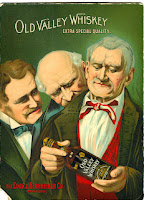
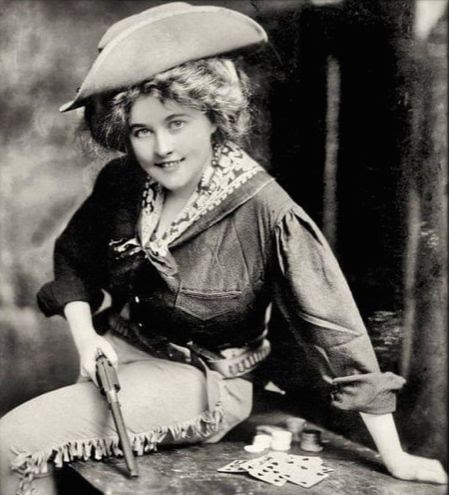
The company’s flagship brand, as shown here on a provocative trade card,  was “Castlewood.”  Decanting it from the barrels in which the whiskey was shipped, the partners sold it in five gallon glass demijohns as well as in smaller quantities.  Their bottles, most of them in amber, often were heavily embossed and ranged in size from quarts to flasks, as shown here.  Like many San Francisco liquor dealers,  the company issued a range of giveaway items to saloons and other favored customers,  among them shot glasses and saloon signs.  among the latter was a dramatic depiction of a Mexican cowboy holding aloft a bottle of the firm’s Azule “pure natural spring water,” said to be from the discovery of the Sierra Azul Springs.

On the personal side,  Frank Cartan’s early life as recorded by the U.S. census carries more than one puzzle.  The 1880 census found him living at 1006 Leavenworth Street as a roomer.  It listed his occupation correctly as “liquor dealer.” But it recorded his birth date as 1850 and that he was then 30 years old but living with his son, Henry, whose age was given as 19 -- my guess is he was younger.  The census also recorded that, like his father, Henry had been born in Ireland.  Those figures would mean Frank had fathered a child when he was a boy of 11, an unlikely scenario.  Interestingly, there was no mother listed in the family.  Twenty years later the 1900 census found Frank still living in a boarding house, apparently a bachelor.  Henry had left and was married.

As their business grew, the Cartan and his partner moved on several occasions. About 1888 they relocated to 312 Sacramento Street and about 1894 opened a second store at 311 Commercial Street, becoming agents for the United Vineyard Company and expanding their wine offerings.  The partnership was dissolved in 1900. Cartan was the owner in charge but McCarthy’s name remained although he personally had departed. Cartan brought into the business his son, Henry, who earlier had been selling cigars, according to census data.

During this period,  Frank also was active in San Francisco social affairs.  Although described as of “a retiring disposition, preferring the company of a few warm friends rather than many,” he was a member of the Shriners, Knights Templar and the Bohemian Club.  By this time he also had married a woman named Nanny A. Carton and moved to nearby Sausalito, a town with many lovely homes on hills overlooking the Pacific.  He maintained a boat in the harbor there that he called “Eblana,” the Celtic name for Dublin and was said to have enjoyed being on the water.

About 1905, only age 55, Cartan’s health declined and he was stricken with paralysis.  A years later he suffered a severe blow when the San Francisco earthquake and fire of 1906  wiped out his business.  As his father faltered, son Henry came increasingly to manage Cartan, McCarthy.  By 1907 Henry had reopened at temporary location at 450 Hayes Street.  That same year Frank Cartan died, attended by Nanny and given the last rites by the Rev. Father Valentine.   He was buried from St. Mary’s Catholic Church and interred in Fernwood Cemetery, shown here.  Because the cemetery’s burial records burned in the 1950s, Cartan’s grave is not identified.

Henry Cartan subsequently assumed full ownership of the business. After a brief sojourn on Hayes Street, he moved the liquor dealership to the southeast corner of Battery and Commercial Streets, remaining there until 1917. His final move was to 354 Battery before being shut down by National Prohibition.

The quality of Cartan, McCarthy’s whiskey was tested in California several years ago by several adventurous lads who discovered tucked away in a cellar a full demijohn of the Irishmen’s product, estimated at over one hundred years old.  After imbibing it, they unanimously declared that the liquor remained of excellent quality.  The “unique and most agreeable softness” rendered by the trip around the Horn seemingly had stood the test of time.  Frank Cartan would have been proud.


Saturday, May 18, 2013

Mathew Quinn: “Faithful Servitor of the People”

In his 1916-1917 liquor price list,  Mathew Quinn of Kansas City, Kansas, expounded his business philosophy and explained in detail the reasons for his success.  He ended by stating:  “We have given proof that this house is a Faithful Servitor of the People.”  What Quinn was serving people in bottle and jug was a wide-ranging line of liquor and wines, as well as groceries, a combination that made him a goodly fortune.  In the process he became an oracle on how to do good business.

Quinn, born in 1869, did not arrive in the world chewing the proverbial “silver spoon.”  He was born in Canada of Irish parentage.  The 1910 census indicated his parents too were born in Canada but that their immediate ancestors had come from Ireland.  The family pulled up stakes in Canada and came south to the United States when Matthew was a tot of about three years.  His early education and work experience do not show up in documents, but we may assume that he served an apprenticeship in the mercantile trades, probably in Kansas City, Kansas.

Quinn surfaced in the written record in an early “History of Kansas,”  teaming with a New Yorker named Martin Myers who had arrived in Kansas City in 1881 to work in the meat packing industry.  In 1886 Quinn and Myers pooled their resources, purchased a stock of groceries and opened a store at 129 North James Street.  According to the history, “they did a successful business at that place for two years....”  The relationship between the two may have been fractious.  In 1888 Myers sold out to Quinn but 15 days later took a new partner and opened another, competing, grocery store in the very next block of James Street.

The differences between Quinn and his partner may have been about the role of liquor sales in their offerings.  Kansas had enacted one of the first statewide bans on alcohol in the U.S., beginning in 1881.  State law imposed strong restrictions on beer, wine and liquor sales. Possibly as a way of escaping those prohibitions, about 1894 the Irishman moved away from James Street, crossed the river to Kansas City, Missouri, and there opened a grocery store at 549 Main Street.  The building is shown here on a Quinn liquor catalog.  According to an article in the Kansas City Times, the store was “leaning more toward the sale of whiskey than of groceries.”  Quinn clearly was proud of his liquor department,  showing it in his brochure and describing it as “the most complete and attractive in Kansas City.”

In the meantime he was having a personal life.  The 1910 Census records Mathew Quinn, age 41,  living at 2610 East 2610 28th Street in Kansas City, with his wife,  Margaret Ross Quinn.  She had been born in Cairo, Illinois, in 1870.  Their family included four boys and a servant girl.  According to the census taker the children were Ross, 15; Vincent, 12; Lester, 7, and Donald, 5.   Mathew’s occupation was given as “merchant-grocer.”

Quinn did not neglect kitchen staples. In time he became a major wholesale and retail grocer in Kansas City.  In 1899 he ran a large ad in the Kansas City Journal that merchandised “carloads of flour,”  “tons salt meat,” and “carloads soap and washing material.”  Among the last were house brand boxes of “M. Quinn’s Laundry Soap” selling for 25 cents.  That same year the newspaper counted him among local store owners who had pledged to display in their street level windows goods made in Kansas City that they were keeping in stock.  As with many grocers of the time, however, liquor proved to be the most lucrative part of Quinn’s business.  As many of the states and localities around Kansas City were going dry, he found his mail order business booming.

He obliged by stocking and selling many top national whiskey brands.  They included "Cascade," “Cedar Brook,” "Clarke's Pure Rye,” "Clover Springs,” "Diplomat,” "Duffy's Pure Malt,” "Four Roses," “Golden Wedding,” "Green River,” "Guckenheimer,” "Mattingly & Moore," “O E V (Old Enough to Vote),” "O F C,” "Old Chief,”  "Old Ripy,” "Old Taylor,” "Pleasant Springs,”  "Sherwood,” "Sunny Brook,” "Susquehanna,” "V B P (Very Best Procurable)” and "W J Garrett."   He also had his own label, whether blended on his own premises or purchased elsewhere is unclear,  a brand of rye he called “Quinn’s Quality Quantity” or “QQQ.”  It sold for $1 a quart.

He packaged this whiskey both in bottles and in a highly distinctive ceramic jug. As shown here, it was a canteen shaped container that came in several sizes and shades of brown.  It was decorated with Quinn’s name and a triangle.  Today it is a favorite with whiskey jug collectors.   He also used less dramatic containers for other beverages, including a bale-topped jug with his logo either at the bottom or the top, either underglazed or with no glaze.  Like other whiskey men, Quinn also advertised through shot glasses,  some of them emblazoned with his characteristic QQQ.   As shown by a catalogue page,  he also put his label on other liquors, like gin, and featured a line of wines and brandies.

Not simply content with terming himself and his business “Faithful Servitor of the People,”  Quinn took special efforts to explain to the public and his customers how he operated.  When his establishment experienced a fire in November 1899, for example,   he took a newspaper ad to promise refunds to his customers for unfilled orders and pledged “...we will turn every wheel and work night and day to get our business running again.”  He ask that patrons put off buying until he once more was able to open his doors.

In his 1916-1917 liquor catalog Quinn calls his establishment “the Largest Grocery, Wine and Liquor House in the West.”   He explained his low prices in detail:  “Of course we buy in car load lots.  Of course we pay spot cash; we don’t even wait the customary twenty to thirty days, which enables us to go into the market and buy the same high class goods for less money than any retail store can purchase them.”

Much of Quinn’s exposition is about his dealing with customers, boasting of a reputation “of never having one complaint or one order returned.”  He added that it was a “record we can point to with pride.”  In another statement addressed to his customers, he said he would “boast just a little” about his policy of seeing to it that any time shipments were lost, broken or damaged in shipping to make good the shipment at once and bear the financial burden until the transportation company reimbursed him.  “...During all these years,” Quinn declared, “not one man, woman or child has ever lost a penny by dealing with me.”

Unfortunately,  Quinn’s 20 years of “square dealing” were soon to come to an end.  Although, unlike Kansas, Missouri never declared a statewide ban on alcohol, the U.S. Congress in 1916 passed the Webb-Kenyon Act that banned mail order sales of liquor into “dry” areas, a law still on the books.  Matthew found his customer base severely diminished.  As National Prohibition loomed,  M Quinn Company, an indication of  its reliance on liquor rather than groceries, is recorded as shutting its doors in 1918.

The same year Quinn’s sons, Ross and Vincent, who probably had been working in his establishment,  started their own business, the Quinn Candy Company.  They are said to have sold their father’s remaining liquor out of their confectionary until National Prohibition in 1920.
Mathew Quinn died in 1921, the cause given as “apoplexy,” a diagnosis that covered everything from heart attack to stroke.   His wife, Margaret, had preceded him in death, succumbing to pneumonia in 1911.  They are buried together in Mount Saint Mary's Cemetery in Kansas City.  A granite plinth says simply “M Quinn.”

The final picture shown here is of the firm’s “private offices.” I am intrigued by the thought that the gentleman at right looking at the camera was Mathew Quinn himself.  In my imagination,  I hear him say:  “Yes, indeed, I was a faithful servitor of the people.”

Note:   In the course of researching this vignette over the past several months, I have been in touch with a descendant of Matthew Quinn whose name also happens to be Matt Quinn.  He has been helpful in adding some information about the family and his assistance is most appreciated.


Monday, May 13, 2013

The Lowenbachs: Whiskey in Three Generations

A name that continues to arise in liquor dealing in both Virginia and Maryland is Lowenbach.   While not all the details are clear,  there is sufficient information to give us substantial clues to the family and their activities, including the bottles and artifacts they left behind.

The story begins in Harrisonburg, Virginia with a merchant there,  probably a liquor dealer, name Moritz (aka Morris) Lowenbach.  The 1860 census recorded him as born in 1825 in Konigwart, a spa town in what now the Czech Republic.  After emigrating to the U.S. and settling in Virginia, the Lowenbachs became an established extended family in Harrisonburg.  One Jonas Lowenbach was recorded as a sucessful tanner and a founder of the Rockingham Bank.   At the time of the census Moritz was 35 years old and married to a Virginia-born woman named Sarah, who was eleven years his junior.  At that point they had no children but three years later Sarah would give birth to a boy they named Charles.  Soon this son would have a sister Lillie, also known as Lizzie.

About 1870,  Moritz moved from Harrisonburg to Baltimore where a brother, unnamed, was living and began a liquor business there.  He called it Moritz Lowenbach & Co.  Over the years the company moved several times to addresses on West Pratt Street and South Howard.  The company flagship brand was “Old Pimlico,”  a familiar Maryland name.  Another brand was “Old Private Stock,” as on the flask shown here.

Sometime during this period,  Sarah died.  Perhaps wanting a mother for his children,  Moritz is recorded as having married a second time.  This time his wife was Bertha, a woman 18 years younger than her husband, but like him an immigrant from Germany.  She gave birth to two more children, Joseph and Emma.  Evidence is that she was a loving stepmother and the two sets of children appear to have been close.

As Charles Lowenbach was growing up,  his father brought him into his liquor business.  Eventually, perhaps when his father’s Baltimore firm went out of business in 1898, the son moved to Virginia, the state of his birth, and began a liquor dealership in Alexandria.  He brought his younger half brother, Joseph, into the business with him.  They called their liquor dealership Lowenbach Brothers. The business was located at King and Alfred Streets in what now is Old Town, Alexandria.

The Potomac Bottle Club book lists a number of bottles from this firm, including a 9.5 inch round glass jug with ears and a wood handle. It advertised “Virginia Rye Whiskey”  Other glass containers included a “lady’s leg” quart with a fluted neck and base. A detail of the face of that bottle proclaims: “From Lowenbach Bros. Liquor Dealers, Alexandria.  A straight necked bottle with the same slugplate also has found its way into local collections.

Lowenbach Bros.’ flagship whiskey brand was Wakefield Rye, a label they advertised widely in Alexandria newspapers.   A 1910 ad shows the partners were not modest in their claims.  It trumpeted that Wakefield Rye was the “Best Medicinal Whiskey” and that their store was the headquarters for the “Best Wines and Liquors in the City.”  A second ad claimed that “If You Want a Good Medicinal Whiskey -- the Right Kind”  you should drink theirs.

As many liquor dealers of that time,  the Lowenbachs issued giveaway items to favored customers.  Among them was a celluloid pocket mirror with a striking picture of the Greek goddess of the hunt, known as Diana.  A close-up of the item shows that it advertised Wakefield Rye,  clearly a lower end whiskey at $4.00 a gallon.

Meanwhile, one of the Lowenbach Bros., Charles,  was having a personal life. About 1886, according to census records, he married India Lewis.  They would have two sons,  Maurice R., born in 1892 and Lawrence, born in 1893.  As the business progressed, Charles and his family moved to Leesburg, Virginia.  Brother Joseph, who may never have married, was recorded living at 900 King Street with a manservant.

Lowenbach Bros. appear to have established another whiskey dealership in Culpeper, Virginia.   The DC bottle book records a labeled half pint that advertises “Pure Old Country Brandy from Lowenbach Bros. of Alexandria and Culpeper.   That designation and other clues indicate that the “mystery bottle” shown here with Taye Griffin, the man who dug it, was a product of Lowenbach Bros.  It is embossed in large letters “Wakefield Rye,”  the brother’s flagship brand.   The embossing also reads “The Culpeper Liquor Company, VA.”  According to a newspaper report,  Griffin had been researching the origin and location of the business in Culpeper for two decades without any success.  My guess it was a storefront from which the brothers sold their liquor for only a few years.

As Lawrence Lowenbach matured he join Lowenbach Bros. in Alexandria.   City directories for several years in the 1910s listed him as a bookkeeper at the firm and boarding at 2226 S. Columbus Street.  When Virginia voted statewide Prohibition in 1916, Lowenbach Bros. was forced out of business.   After three generations in the whiskey trade,  members had to find new occupations.   The 1930 census recorded Charles and his wife, India, still living in Leesburg at 316 King Street.  Charles was working as the manager of a hardware store.  Other Lowenbachs lived next door, likely a nephew and his family.

Charles died in 1937, followed by his wife in 1948.  The two are buried in Leesburg’s Union Cemetery where they occupy Plat B, Lot 638, Site 3.  Laurence Lowenbach, who died in 1944, is buried near them. No evidence exists that Lawrence  attempted to open a liquor dealership after Repeal in 1934.  Thus ended the Lowenbach dynasty that over three generations did whiskey business in two states and four towns.

Note:  The information for this article came from a variety of sources,  principally census records.   Photographs of Lowenbach bottles are through the courtesy of Dr. Richard Lillienthal.


Thursday, May 9, 2013

The Wandering Dane Found a Home in Minneapolis

He called himself Andrew Madsen Smith.  In his autobiography he identified himself as “Soldier and Sailor, Moulder and Merchant, Tramp and Trader, Soap-boiler and Scribe, Peddler and Philosopher,  Overseer and Understrapper,  Jack-of-all-Trades and Master of Fortune.”  He was all of those and additionally a successful whiskey man, but he chose to write under the name Hans Lykkejaeger, “The Wandering Dane.”

Smith story began when he was born in Juteland, Denmark, in 1841 to a poor family and began life named Anders Madsen Schmidt.  According to his autobiography, while still young he was put to work in a foundry but soon ran away to the sea.  His career took him to many adventures as a ship’s cook,  a London street tramp, and then back to sea and, through jumping ship, to the clutches of Indians in the jungles of Brazil.  Eventually he shipped with an American vessel.   When the Civil War broke out he took a bounty payment and joined the Union Navy.  When that enlistment ran out he joined the Union Army, later had another stint in the Navy and then again was in the Army,  fighting Indians in California.  Smith’s life in America took him all over the country, often on foot, and included jobs farming, peddling, and working on the railroad.

It was in that last occupation at Ogden, Utah, that Andrew/Hans, a large man who eventually weighed 250 pounds, met the love of his life.   In his book she is “Gretta.”  In life she was   Bottila Elgberg, a Danish immigrant nine years his junior, a woman who initially spurned Smith but married him in April 1872.  In his autobiography,  Smith/Lykkejaeger says of her:   “I was looking for my luck and found her.  Finding her, I found my luck.”  His account ends with the newlyweds moving to Salt Lake City that same year where he at last found his calling as a whiskey man.  Under the name A. M. Smith with $10 cash he opened a liquor store he called the California Wine Depot.  A bottle from that period is shown here.

The autobiography ends in Utah.  Here the story was picked up by Ron Feldhaus in his book on Minnesota bottles.  With ample advertising, good whiskey and wines, as well as canny investments,  Smith became a financial success in Salt Lake City.  An amber flask shown here exist from this enterprise.  Ever restless, he pulled up stakes in 1876 and with his family headed east to Philadelphia where he set up another liquor store.   After an initial business failure (something to which he was accustomed) Smith started over in the City of Brotherly Love, succeeded the second time and in 1886 was able to set up a small branch in Minneapolis, Minnesota.


Perhaps drawn by the large Scandinavian immigration population in that state, when the business in Minnesota thrived,  Smith sold his Philadelphia store and moved his family West to Minneapolis. It would be home to “The Wandering Dane” for the rest of his life as the California Wine Depot became a fixture at 249 Hennapin Avenue.  That appears to be Smith’s bulky frame at the center of his highly illustrated wine label and trade mark.  For a number of years he also ran a eatery next to his store he called the California Restaurant.

The Dane featured a number of brands,  including “A.M. Smith’s Special Bourbon Whiskey,”  "Fine Old U. S. Cabinet Rye,” "Flour City Rye,” "Golden Buck,” "Harvester" and “Pennant.”  One brand was a “Amsco,”  an anagram of Smith’s assumed name. He also was noted for his “Crescent Brand” beverages.  He advertised these vigorously, including ads purportedly showing the large casks of wine and whiskey at the interior of his establishment.  He also featured trade cards with winsome children as the focus.

In a city where whiskey men regularly supplied saloons and other favored customers with gifts,  Smith was famous for his giveaway items. Among them were highly decorated shot glasses, artistic and finely etched.  He also provided tip trays.  Unlike other liquor dealers who lithographed their name and product around the edges, which sometimes made them hard to read,  Smith put his name and message right into the design.  He may have fancied himself the roaring lion shown on one tray.  Both trays were made by Chas. W. Shonk of Chicago. In addition, Smith was noted for distributing calendars, almanacs,  dominoes, corkscrews, and brushes as merchandising artifacts.

Smith's largesse may have stemmed from his own collecting interests.  He was a world known collector of rare coins, beginning during his period in Philadelphia when he worked as a coin dealer as well as a liquor merchant.  He subsequently wrote three  books on coins, beginning in 1881.  His “Encyclopedia of Gold and Silver Coins of the World” (1886) is still prized by numismatists and is itself sold for large sums.  Looking at pages of the tome is convincing both of Smith’s knowledge of coins and his ability to present information in a highly organized fashion.  Referring to bottle collecting,  Feldhaus says that of all Minnesota whiskey men “perhaps A.M. Smith would have best understood our hobby.”

In time Smith’s wine and liquor business became one of the largest in the region.  As localities in Minnesota and neighbor Wisconsin were voting “dry” through local option, he also did a thriving mail order business.   Discussing his success, Smith said, “And we are continuing to do better and better and better. I have increased in size, property and family.” 

It apparently was during a prosperous era that that Smith decided, using a “nom de plume,”, to write the story of his early life and likely to self-finance its publication. Originally entitled “Up and Down in the World: Or Paddle Your Own Canoe” and later “Luck of the Wandering Dane,” the book was first published in 1885 and ran 130 pages, with illustrations on virtually every page by an unnamed artist (Smith himself?).  The book cost 25 cents and on its cover states:  “For sale by all news dealers.”  A reviewer in the Atlantic Monthly said sourly of Smith’s autobiography:  “Occasionally the tale is told with snap and cleverness, but on the whole its humor is rather of the swaggering sort and hardly worth smiling over.”

The 1910 U.S. Census found Andrew and Bottila living in Minneapolis in a house with a niece and two servants.  He was 69 and gave his occupation as “liquor merchant.”  After years of running his wine and liquor business in Minneapolis, Andrew Smith died in July 1914, ostensibly as the aftermath of wounds he had suffered during his Civil War service.  His son, Mason Smith, carried on the business until it was shuttered by the coming of Prohibition in 1919.  By this time the family interests had diversified to an automobile dealership and a sand and gravel business.

Note:  “Luck of a Wandering Dane” has been republished by Hewlitt Packard as part of  a series of reprints from the collection of the University of Michigan Library.  It is worth reading about the early years of this “larger-than-life” whiskey man, but the current cost of the book is somewhat more than the 25 cents asked for the original.  Smith’s autobiography also may be available at no cost in an on-line version.


Monday, May 6, 2013

Philip Freiler’s Shot Glasses Were Fathered in Time

 Note: As indicated in earlier posts on this blog, when I come across an article on a pre-Pro whiskey man that exhibits thorough research and is as good or better than one of my  own authorship, I will, with permission, add it to my blog.  This is the case with Philip Freiler , a whiskey man of Elgin, Illinois.  Freiler’s story has been well told by Dick Bales in his “Common Stuff” column on the Pre-Pro.Com website.  With Dick’s permission,  after some minor editing, his article and illustrations are reproduced here:

Philip Freiler was born in Hartford, Connecticut, on April 3, 1860. His parents, Joseph and Mary Freiler, moved their family to Chicago in 1867, where Joseph started a wholesale liquor business.  In 1878 the Freiler family moved to Elgin, Illinois, where Joseph started a similar business. In 1883, due to failing health, Joseph sold his liquor enterprise to Philip.

Here are two pictures of the Freiler establishment on River Street in Elgin. Freiler is pictured in the one faded newspaper photograph. He is the fourth person from the right, standing, with no coat or hat. An arrow points to him.  Philip Freiler and his wife Elizabeth had four daughters. The family lived on Douglas Avenue in Elgin. At left is a picture of their home, taken in about 1895.

Remarkably, there seems to be a connection between Freiler’s whiskey and an Elgin watch company!   The National Watch Company was incorporated in 1864. The company was reorganized in 1865 and a factory was built in Elgin in 1866. In 1874 the company changed its name to the Elgin National Watch Company.

As the accompanying illustration indicates, the symbol of the Elgin National Watch Company was a winged Father Time facing to the right, holding a scythe in one hand and a clock in the other.  It appears that when Philip Freiler introduced “Father Time Whiskey” to the drinking public, he merely flipped the Elgin National Watch Company picture over and used a version of this Father Time as his logo! These two “Father Time Whiskey” shot glasses also show a winged man holding a scythe and a clock, but here the figure is facing to the left.  The connection seems to be indisputable.

Father Time has been around for hundreds of years, but the wings seem to be an almost unique feature, and both the National Watch Company logo and the Father Time Whiskey glasses feature a winged Father Time.
  
Philip Freiler was not merely a local whiskey wholesaler. He sold his product throughout the Midwest, and he did not sell just Father Time Whiskey. Shown here is a “Century Club Whiskey” glass.    Philip Freiler glasses run the gamut from the beautiful Father Time Whiskey glasses to very plain looking all-text glasses.

 In 1938 the Century Distilling Company got into a trademark dispute with the Schneider Brewing Company. This federal case, indexed as 26 Fed. Supp. 936, offers some wonderful information about Philip Freiler in the opening paragraphs:  "One Philip Freiler of Elgin, Illinois, first used the name ‘Century Club’ as a name of whiskey in May, 1883, and established it as a well-known brand with a wide distribution in the Middle West. When the City of Elgin went dry under a local option law in 1914 he sold his entire business to Henry A. Klein, doing business as the Liquor Dealers Supply Company. Before that time, however, and on April 20, 1905, Freiler had registered the trade-mark ‘Century Club’ for whiskey and registration was issued to him by the Patent Office March 19, 1907.

Klein paid an ample consideration and continued the business under the Freiler name and manufactured and distributed gin and whiskey as “Century’ until prohibition."  This case was appealed in 1939, and the lead paragraph of this case confirms that  “Philip Freiler was engaged in the wholesale liquor business at Elgin, Ill., from 1883 to 1914.”  Freiler died on April 11, 1916, in Elgin, and he is buried in Waldheim Cemetery, Forest Park, Illinois. This cemetery features the famous Chicago Haymarket monument.

Philip Freiler has been gone for almost a century, but luckily for us, his glasses live on. None of the glasses pictured here seem to be all that common. It seems likely that one could spend years trying to amass a complete collection of all the Freiler glasses. There are also Freiler advertising items, such as these playing cards.

Addendum:  In addition to the whiskey labels noted here,  Freiler used a number of other brand names, including "Belle of Navarre,” "Bluff City,” “Congress Club,” "Dr. Schenk's,” "Freiler's 1869 Elmwood,”  "Freiler's 1880 Congress Club,”  "Freiler's 1883 Fine Old Little Joe,”  "Freiler's Old Bluff,” "Freiler's Old Little Elgin,” "Freiler's Silver Tide,” "Kentucky Queen,” "Old Elgin,” and "Ready Money."