Friday, May 13, 2022

Isador Bush: Renaissance Whiskey Man of St. Louis

Forward:  In doing research on a “pre-Prohibition whiskey man” for this website, I sometimes come across an existing biography that tells the story as well or better than I could.  Such it is with Isador Bush.  Ferdinand Meyer V in his Peachridge blog of February 27, 2019 provided an excellent portrait of this St. Louis wine and liquor dealer, a “Renaissance man,” as Ferd described him.  Ferd graciously has given me permission to reprint the article here.

Isidor Bush was born in the Prague, Bohemia on January 15, 1822. He was the great-grandson of Israel Honig Edler von Honigsberg, who was the first Jew raised to nobility in Austria. As a child, Isidor was favored by his father Jacob as his mother, Fredericka had died when he was only three years old. Isidor Bush was privileged and was able to surround and associate himself with many Jewish intellectuals while growing up.


Bush was somewhat of a Renaissance man in that he was, among other things, an author, publisher, journalist, grocer, banker, railroad freight agent, politician, abolitionist, insurance agent, civic leader, philanthropist, capitalist, patriot, wine and liquor merchant,  and a viticulturalist, one of the first grape growers and wine producers in Missouri.


When Isidor was fifteen years old, he moved to Vienna and worked at Schmid’s Oriental Printing Establishment, which his father had acquired. At this young age, Bush became engrossed in the printing business and turned to the study of languages. Soon he could read and write in Greek, Latin and Hebrew along with his native German. For six years (1842–47), Bush edited and published the Kalendar und Jahrbuch für Israeliten among many other important works. Eventually, Bush became a partner and a leading book pioneer and publisher in Vienna and the firm was renamed Schmid and Busch.


With the Austrian Empire Revolution in 1848, Bush had to flee to America and settled in New York City along with many other liberal Jewish intellectuals. He arrived on January 8, 1849 with his wife Theresa Taussig who he married in 1844 and their son Raphael. There Bush opened a store that sold newspapers and stationery. On March 30, 1849, Bush founded and published the first issues of Israel’s Herald, the first Jewish weekly in the United States which was patterned after the journal he had published in Vienna. Unfortunately, the effort failed financially, so Bush had to stop operations after only three months.


With little available funds, Bush moved to St. Louis, Missouri in the summer of 1849 where his wife’s family, the Taussig’s had settled. There Bush entered into partnership with his wife’s father Charles Taussig, in the firm of Bush & Taussig. They were one of the leading merchants in the city specializing in groceries and hardware located at Carondelet and Park Avenue. Bush and Taussig would run the general store successfully on the south end of St. Louis for many years.


Isidor Bush became a naturalized citizen in 1854 and ardently opposed slavery and championed the Union cause. In 1857, Bush helped incorporate and was made president of the Peoples’ Savings Bank in St. Louis. In the late 1860s he was also president of the Mechanics Savings Bank, and later served as actuary for the German Mutual Life Insurance Company.


When the Missouri Convention was called to determine whether the state should join in the secession movement, Bush was chosen a member on the Unconditional Union ticket, and was made a member of the Committee of Nine, to which most important matters were referred such as abolishing slavery and forming a new constitution. He was also elected a member of the Missouri state board of immigration to repair losses in population resulting from the war, which post he retained for twelve years.


Despite many successful endeavors, Bush never really became a wealthy person in the traditional sense. He certainly suffered his share of financial setbacks but typically was able to rebound, take care of his debts and move on. He was always on the forefront of thought and innovation and prospered sufficiently to position him as a leader in the Jewish Community and the city of St. Louis. One of those associations that Bush was prominent in was the B’nai B’rith, the famous national Jewish fraternal and philanthropic organization. His achievements within the organization were substantial. Bush also served on the City Council and Board of Education in St. Louis as he held public education in high regard.


Bush apparently suffered physical disabilities in a fire when he was a child that prohibited full military service, so he assisted the Union cause in other ways. When Gen. John C. Fremont (the Pathfinder) took command in 1861, with headquarters in St. Louis, Bush was made his secretary and aide-de-camp, with the rank of Captain. He submitted to Secretary of the Treasury, Salmon P. Chase a plan for a government loan of one hundred million dollars, similar to the famous Rothschild premium loans of Austria. Chase feared its rejection by Congress, but was impressed with Bush’s financial genius, and offered him a Treasury clerkship.


Bush refocused after the Civil War back to St. Louis, and became for six years the auditor and general freight and passenger agent for the St. Louis and Iron Mountain Railroad Company. He later would become director of the railroad, serving until 1865 when the line was taken over from New York by financier Jay Gould and the State foreclosed its liens on the railroad.


Next, Bush partnered in the real estate firm of Barlow, Valle & Bush. Interesting enough, Bush was able to purchase many tracts of land south of the city in Jefferson County that were next to the railroad tracks and Mississippi River. The first tract was purchased in February and March 1865 and included 241 acres near the present-day town of Pevely. He had become familiar with this land during his years with the Iron Mountain Railroad. This land was ideal as his research assured him that the land was adaptable for growing grapes and fruits while having an excellent steamboat landing.


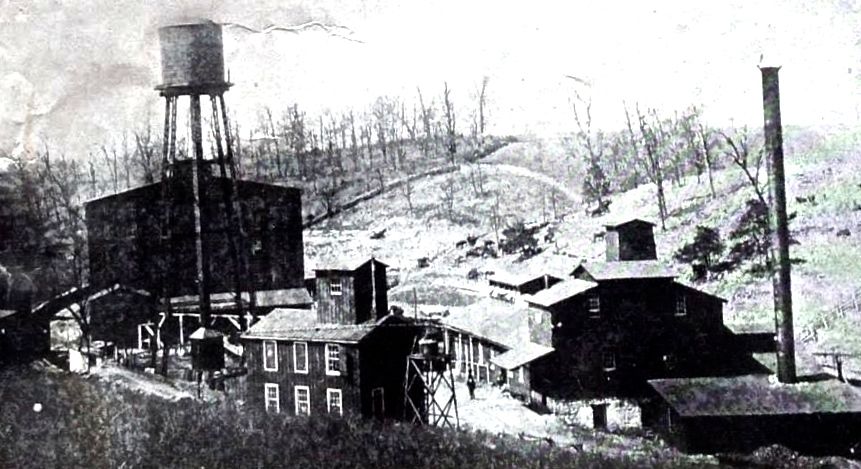
Owning this land would play out as Bush became interested in wine-making and created the Isidor Bush Wine Company. He called all his land “Bushberg,” which of course he named after himself. The image above shows the town of Bushberg facing the river in 1880. It was at one time a thriving community complete with steamboat landing, railroad station, post office, wood yard, hotel and a saloon. The image below shows the Bushberg hotel. Both images courtesy of the Missouri Historical Society.


Bush even had the foresight to send his son Raphael to apprentice with viticulturalists in Hermann, Missouri and Cincinnati, Ohio to learn the trade. Their grocery business had suffered during the Civil War and the senior Bush wanted to spare his son from the whims of commercial life. He also felt that agriculture was a more noble Jewish pursuit.


By 1868, the vineyard had nine acres with 20 varieties of grapes. That year the vineyard purchased the post office to handle its growing mail-order business as the company was extremely successful in raising grapes and became known for its products. Before long, Bush was considered a leading expert in viticulture. He even sent large quantities of cuttings from his vineyards to France to replace the ravages there by phylloxera as his wild American vines had a greater resistance to the root louse. In 1871, Bush hired Gustavus E. Meissener who was operating a nursery in Waterloo, Iowa to become his foreman at Bushberg. He would eventually become a partner in the wine growing and vineyard business.


Bush, after years of preparation, published his first catalogue of grapes in 1869-70 called the Illustrated Descriptive Catalogue of Grape Vines, Small Fruit and Seed Potatoes. The vineyards’ reputation had spread in the 1870s so The Bushberg Catalogue evolved and only focused on grapes. This catalogue went through a number of generations and was translated into several languages with international acclaim.


In 1870, Bush and his son Raphael organized the firm of Isidor Bush & Son to run the wholesale and retail trade which grew into one of the most successful wine and liquor enterprises in St. Louis. Their primary address was 314 Elm Street. It was during this period that the Missouri IXL Bitters was produced. I have only seen one example. I believe it was dug in Pekin, Illinois before it came to its present owner.


The northern California wine business was rapidly growing by the end of the 1800s and impacted the Bush wine business. There seemed to be less demand for his vines and his research. The vineyard would close in 1895. The town of Bushberg would cease to exist.


Isidor Bush died in St. Louis on August 5, 1898 and is buried in Bellefontaine Cemetery. His wife Theresa had previously died in 1893. Isidor Bush was a admired person and was considered one of St. Louis’s finest citizens. He also had his name on a bitters bottle.


Note:  Ferd amply has referenced his sources for this post on his Peachridge site, https://www.peachridgeglass.com.  His interests primarily are bitters, mine is whiskey.  Because many pre-Prohibition distillers and liquor dealers carried a line of bitters, our research often coincides. Ferd’s article on P. J. Murray and his Boston saloon can be seen on this site at September 7, 2017.







Monday, May 9, 2022

Bond & Lilliard: Whiskey Born of U.S. Wars


During the 53 years from 1812 until 1865, the United States was embroiled in three wars, one against a colonial power, one against a neighbor, and one internecine.  Members of an extended distilling family are counted as having participated in all three, a distinguishing element in the story of Bond & Lilliard, distillers of Anderson County, Kentucky.  William F. Bond, shown here, anchored the family.


William’s father was John Bond born in Anderson County, Kentucky, in August 1791,  the son of pioneers William and Sarah Cranston Bond.  Some writers erroneously have called him a veteran of the Revolutionary War, an impossibility since John was born eight years after that war ended.  John would have been 21 at the time of the War of 1812, however, and a large contingent of Kentucky riflemen fought along side Kentuckian Andrew Jackson at the Battle of New Orleans.  Although no direct evidence exists, John Bond may have been among them.


William Bond’s participation in the Mexican War is indisputable.   He was a member of Company C of the Second Kentucky Volunteers, a regiment known as “The Salt River Tigers.”  The name came from the 150 mile long river that flows through Kentucky.  The Tigers are reported to have averaged about six feet with 42  men above that height.  Henry Clay was a colonel with the regiment.


Some accounts have credited the Salt River Tigers with having turned the fate of battle at Buena Vista.  The Mexican and American forces for some time had been facing each other behind the breastworks with only a few yards separating them.  One senior officer suggested to another that a charge would be in order.  “Instantly the tallest and fiercest of the Tigers, seeming to think a charge had been agreed upon, gave their particular yell for advance, and the enemy was repulsed.”  The Tigers lost an estimated six men in the assault, shown above.  William Bond emerged unscathed.


William returned to Anderson County.  John had built his first distillery in 1820 on a site that was not far from the McBrayer plant on Cedar Brook. [See McBrayer post of Oct. 2, 2011.]   In 1836, needing more space, the distillery was moved to a site closer to Lawrenceburg.  Six years later the “Founding Father” died and was buried in a cemetery located on a family-owned farm.  


John and his wife, the former Sarah Utterback, had several children, among them William born in 1826.  When Sarah died, he remarried a woman named Mary Johnson and began a second family.  This may explain why the distillery was left to the youngest child, David, who was still only an infant.  Among Kentucky distillers this sometimes done to insure an income for the widow as custodian.  By 1849 William, returned from the war, officially took over the operation.  He was 23.  The following year William married Sarah Mary Hanks.  The couple would go on to have 12 children over the next 19 years.


Meanwhile, William’s younger sister, Margaret had married Christopher C. Lilliard. Born in 1833, Lilliard, shown here in maturity, enlisted in the Confederate Army in July 1861. He was mustered in as a first Lieutenant in Company I of the Kentucky Second infantry, the same outfit as William Bond’s that had acquitted itself so valiantly in the Mexican War.


 An early engagement of the regiment was at Fort Donelson, the battle shown above.   This time the 2nd Kentucky did not fare so well.  After a stunning victory for Northern forces led by General Grant, the entire regiment of more than eight hundred men was captured.   Among them was Lieutenant Lilliard.  After spending some time in Yankee prison camps, the Kentucky soldiers were exchanged and returned to fought on at Shiloh and other battles, taking many casualties.  Sometime after his release Lilliard resigned his commission and went home.


William Bond quickly realizes that his brother-in-law, also from a whiskey-making family, would make an excellent junior partner.  Thus was born the distilling house of Bond & Lilliard.  Their distillery was described as “located off Bond’s Mill Road about two miles from Sweet Mash.”  The partners rapidly earned a reputation for making a high quality bourbon.  Their whiskey would go on to win the Grand Prize at the Louisiana Purchase Exposition in St. Louis.   The award gave the Bond & Lilliard brand tremendous credibility.  Both partners became prosperous as a result.  Bond was able to lodge his large family and attending servants in the mansion home shown below.


In June 1892, the distillery was destroyed by fire, a loss set at $10,000, but uninsured.  The partners quickly built back.  According to insurance underwriter records, the revived distillery, shown here, was of iron-clad construction with three warehouses of which two were ironclad with a metal or slate roof.  The third warehouse was frame but had a fire resistant roof.  Two of the warehouse were fully under “Bottled in Bond Act” government supervision, one was partially “free.”


Things began to change in the 1890s.  In 1894 Lilliard had a stroke that left him partially paralyzed.  He gradually weakened over the next two years until June 1896 and died on the 24th at age 68.  The Lexington Morning Herald obituary saluted him as “one of Lawrenceburg’s most prominent citizens and his death will cause sorrow in many other parts of the state.”  He was buried in Lawrenceburg Cemetery adjacent to the monument shown here.


Lilliard’s death may have resulted in a change of name.  Shown there is a J. Bond & Co.trademark drawing that may relate to the Bond family distilling interests.  I am fascinated by the Nancy Hank’s name — Lincoln’s mother. William Bond’s wife was a “Hanks.”  In this case, however, the name seems to relate to a sulky race horse that in 1892 broke the world record for the mile.


After Lilliard’s death William Bond seemed to have lost interest in running the distillery.  By now in his seventies he may have been feeling the effects of age.  In 1899, he sold the distillery and the brand name to the Whiskey Trust, an aggressive attempt by New York financiers at a whiskey monopoly.  Bond lived another eleven years, dying in July 1910 from what was described as “a complication of diseases” at the age of 83.


William’s obituary in  the Lawrenceburg daily accounted him one of Anderson County’s oldest and richest citizens.  It recounted his war record, his 1871-1872 service in the Kentucky legislature representing Anderson County, and his success as a distiller.  The article concluded:  “His benevolence of character made him one of the most popular citizens of this county, and his loss  will be deplored by all who appreciate eminent worth and excellence of character.”  After funeral services in his home William Bond was buried in Lawrenceburg Cemetery.  His monument is seen here.  


Given the stellar reputation of Bond & Lilliard whiskey,  Trust officials retained the name, turning over distillery operations to Stoll & Company, a Lexington-based  firm that worked closely with the cartel . The Stolls on their letterheads and advertising claimed to be “sole proprietors of Bond & Lilliard.”  [See post on the Stolls, April 23, 2017.] The bottle shown here likely dates from that era.


The coming of National Prohibition caused the disappearance of the brand for a number of years but was revived by the owners of Wild Turkey who continue to distill and bottle it at their facility in Lawrenceburg.  While the original Bond & Lilliard recipe may be lost, at Wild Turkey an attempt apparently has been made to mimic what impressed the judges at the 1904 Louisiana Purchase Exposition by putting the 100 proof whiskey through a charcoal filtration to give it a lighter color and taste.  The Bond & Lilliard bottle has been given a very distinctive label.  It touts the whiskey as being “linked to the hearts of these two sturdy men.”


In a 1906 supplement to Lawenceburg’s newspaper, the Anderson News, the unidentified author waxes poetic about the still thriving Bond & Lilliard distillery located in a lush natural environment:  “As the traveler winds his way around [the lake stocked with fish and minnows] that leads to this plant, he is greeted by nature’s own sweet breath, spiked with mint, and the pungent and invigorating aroma of Bond & Lilliard grown ripe and mellow.”  A contemporary photo of the site shows the surroundings still lush but of the distillery William Bond and Christopher Lilliard created, only a single wall remains.


Notes:  This post, including photos, has been gathered from a number of sources available on the Internet.  Of particular help were obituaries of the principals from Lawrenceburg newspapers.


Thursday, May 5, 2022

Sam McHarry and His Distilling Guide for the Ages

In 1809 when Samuel McHarry wrote his book, “The Practical Distiller,”  he was apologetic.  In pursuing his own distilling efforts, he said, he could find little help from practitioners or in print:   “Could I have witnessed the publication of a similar work by a man of science and education, mine should never have appeared.”  The jottings of this farmer from Lancaster, Pennsylvania, not only was published, it apparently has never been out of print.   A dozen different covers from ensuing years of publication, reproduced below, attest to its longevity.

Although McHarry had a lot to say about the state of distilling, he was silent on why he decided to make alcohol from the rich grain and fruit lands that are Lancaster County.  My assumption is that his farm was producing more output than he could feed to livestock or easily sell.  It also was abundantly clear that a gallon of whiskey could fetch as much money as ten bushels of rye grain.


McHarry’s silence on “why” is more than made up by his distain for American distillers.  He deplored “the circumstance of so many knaves, blockheads and conceited characters being engaged in the business” and describes his own futile efforts to learn from a highly regarded local distiller only to find out that the man had no idea why the quality and quantity of his runs differed sharply from day to day.  He inquired of other distillers, some of whom attributed whiskey variability to “witchcraft.” 


 Nor could McHarry find any written material on the subject:  “To my surprise, after a diligent search of all the book-stores and catalogues in Pennsylvania I found there was no American work extant, treating on this science….”  European manuals he found at variance with American “habits, customs, and mode of economy.”


As a result, after years of working things out “from scratch” for himself, McHarry decided to write his own distiller’s handbook.  In this endeavor, he had the expert help of John Wyeth of Harrisburg, Pennsylvania, a journalist, and experienced publisher whose presses had printed numerous books with a Pennsylvania flavor that were said to be “extremely popular and extremely profitable.”  Approached by McHarry, Wyeth enthusiastically agreed to publication and likely supplied needed editorial services to McHarry’s manuscript.  Thus in 1809, “The Practical Distiller,” shown here, saw its first edition.  It would not be the last.


The “do-it-yourself” manual was advertised as “An introduction to making WHISKEY, GIN, BRANDY, SPIRITS, etc…from the produce of the United States: Such as RYE, CORN, BUCK-WHEAT, APPLES, PEACHES, POTATOES, PUMPIONS [pumpkins], and TURNIPS.”  In other words, if a grain or fruit could produce alcohol, McHarry would show you how to turn it into booze.


In his chapter on distilling whiskey, McHarry described four different recipes, one of all rye grain, a second two-thirds rye and one-third corn, a third half rye and half corn, but his recommended mix was one-third rye and two-thirds corn:  “That corn has as much and as good whiskey as rye or any other grain, cannot be disputed.”  That, however, was not why McHarry favored this recipe.  Always looking at the “bottom line” of profitability, he contended that the spent mash or “slop” from this mix was “Much superior to that of any other grain for feeding or fattening either horned cattle or hogs….”  Fatter hogs meant a fatter payday.


Again with an eye to profit, McHarry contended that it should be possible, given good grain, pure water, and suitable weather to eke four gallons of whiskey out of a single bushel of grain.  (Later, whiskey scientist Dr. James Crow would decree not more than 1.5 gallons per bushel.)  The Lancaster County farmer also included advice on transporting whiskey to market.  He calculated that a distiller who sent a wagon load of 300 gallons of whiskey worth $150 to buyers seventy miles away would pay an $18 hauling cost.  If found upon arrival and inspection to be both under-proof and having lost volume, the whiskey might fetch only $105, a loss of $27, more than $600 in today’s dollar.   McHarry’s lesson:  Be sure of proof and tight barrels.


McHarry also recommended distilling potatoes.  Although nowhere does he mention vodka, he contended that potatoes made “a very good spirit” that might substitute for brandy or rum.  Morever, potatoes were cheaper to grow than rye and would be “a source of profit…, encouragement to the farmer, and be of benefit to our country at large.”   McHarry followed his recipe for potatoes by suggesting it could be adapted to pumpkins and turnips.  Of turnips, however, he warned that they “will produce nearly as much spirits as potatoes, but not so good.”


Following chapters of “The Practical Distiller” contain advice on making various types of wine and beer. Nowhere in the volume, however, do we learn anything about McHarry’s personal life.  We know he was born in Lancaster County about 1785, just two years after the end of the Revolutionary War.  His father, Alexander, who spelled his name “Maharry,”  was an immigrant from Ireland and a farmer.  His mother was Ann Robesson, of Pennsylvania stock.  She was 30 at Samuel’s birth; Alexander was 31.  McHarry had one brother, William, born in Leacock, Pennsylvania, when Sam was one year old.  The distiller/author apparently never married.  He died in 1843 when he was 58 years old.  I have been unable to identify his place of interment.


McHarry lives on in the book published in 1809, a work that to my knowledge has never been out of print.  Every succeeding generation, it would seem, has been interested in “home” distilling and a raft of publishers with no copyright to worry about have rushed to put McHarry’s recipes and advice into print.  In January 2008, an original leather-covered copy, shown above, sold at auction considerably above estimate at $4,800.


Note:  More recently another original copy of “The Practical Distiller,” said to be “in delicate condition” and bearing some water stains went up for sale at $2,500. This copy had the additional provenance of being originally owned by John Hoge, an early Pennsylvania settler and Revolutionary War soldier.  Hoge is believed to have run a tavern in Washington, Pennsylvania.


Sunday, May 1, 2022

Three Inventors of Distilling “Improvements”

 Foreword:  Making whiskey is not like peeling potatoes or baking bread.  It requires a highly mechanized process involving a number of instruments to help the distilling process along the way.  In the past a few invention-minded Americans have put their genius (or something) to work in improving elements of whiskey manufacture and testing.  Here are the stories of three such inventors and the widely varying results of their efforts.

Mark Twain called it a “ten million dollar swindle.”   The U.S. Commissioner of Revenue saw it as the answer to preventing the government from being deprived of “a vast amount of revenue” through frauds committed by distillers. They both were referring to the spirits meter invented by Isaac P. Tice, a New York mechanical engineer and inventor.  For Tice the meter represented recognition of his inventive skills and a monetary bonanza.


In 1867 strong evidence emerged that the national government was being cheated out of tax money through frauds committed by distillers.  For the Commissioner of Revenue the answer was to measure liquor output by means of meters attached to stills that would aid inspectors in detecting gross underestimates of spirits being manufactured.  The Commissioner advertised for inventors to come forward with meters and asked the National Academy of Sciences to appoint a committee to review the submissions and select a winner.  


Tice, an engineer working in New York City, already had patented an improved windmill, milk rack, and water meter, among other items.  After the water meter proved to be commercially profitable, Tice had turned his attention to liquor.  In March 1867 he had patented what he called a “Revenue Guard for Stills.” Using that as a model he submitted what was called the Tice Spirit Meter, shown below — and won the government contract.


Forced to buy the device, distillers, some of whom required multiple devices,  were appalled at costs of up to $1,500.  Tice, who had a wife and three children, had never seen so much money.  Faced with anguished howls from distillers, officials in 1871 retested the Tice Meter, decided it was inaccurate, and discontinued its use.  In the meantime, hundreds of distillers and rectifiers had been forced to buy it — and now Tice meters had been trashed.  The inventor’s reputation and income plummeted.  Four years later Tice was dead at age 41, leaving behind a widow and three minor children.


In 1872 Gordon Byron Bingham of Patoka, Indiana, patented an upright tank for holding liquor that he claimed was aimed at preventing “fraud on the revenue.”  Just three years later, as a distiller, Bingham, shown left, was implicated and convicted as a participant in the “Whiskey Ring,” whose sole purpose was to defraud the revenue.  As a result, Bingham ruined himself and the town of Patoka was said to be thrown “on the downgrade of the stream of time….”


Having a mind for invention, Bingham in February 1872 patented a metal tank for holding whiskey that, he claimed, would "prevent fraud.”  Shown here, his "high wine cistern" was aimed at preventing the tax-avoiding removal of spirits that otherwise could go undetected by a U.S. revenue gauger.  Bingham's invention, he said, provided federal officers with "...an easy means of determining at all times, the exact proof and quantity of the spirits within the tank.”  The invention went nowhere.


Ironically, it was not long after obtaining his patent that Bingham became entangled in the massive fraud against the U.S. government’s collection of taxes on spirits, a scam that became known as “The Whiskey Ring.”  By massive payoffs to top revenue officials and the “watchdog” gaugers,  distillers and “rectifiers” (whiskey blenders) in the Ring were able to get away with paying only a fraction of the liquor taxes they owed.  Indicted in 1875, the Feds seized Bingham’s distillery, stocks of whiskey and other tangible property.  Thoroughly cowed, the Indiana distiller pled guilty and became a principal witness for the government. Other Ring defendants detested him for “squealing”.


Disgraced, headed for jail, and beset on all sides,  Bingham within a matter of days was dead, passing on January 10, 1876, at the age of 49.  The effects of Bingham’s fall would continue to be felt.  His widow, with five minor children, was sued by the government for $30,000, representing the amount believed to have been fraudulently withheld.  Some Patoka residents implicated with Bingham were disgraced and bankrupted over the scandal.  With its distillery gone, the town of Patoka — an Indian name meaning “log on the bottom” — went into serious decline from which it never recovered.


Recently Whiskey Magazine listed the 100 “Greatest Whiskey People,” highlighting individuals worldwide who have left a lasting legacy to the whiskey trade.  Frederick Stitzel, left, was among that chosen few.  His claim to fame was based on his patented invention for stacking barrels of whiskey for aging.  Earlier the custom was to stack them directly on top of each other.  This was a highly risky practice.  Each barrels held about 53 gallons of whiskey and filled would weigh around 500 pounds.  Putting one of those behemoths on top of another could cause leakage, outright ruptures and other problems.


As shown here in a drawing, Stitzel’s system consisted of what he called rails, shelves attached to heavy wooden frames to support the weight of individual barrels.  The rails were spaced, so that when a barrel was placed on its side, each end would be supported by a rail.  It also allowed for the barrels to be turned from time to time, assisting the aging process.  Stitzel’s design called for each section to be made separately, allowing easier configuration of tiers in the warehouse.  Stitzel rails currently are in  use in most American distilleries.


With his father and brothers, all immigrants from Germany, Frederick also was a  major Kentucky distiller.  The  Stitzel distillery, above, eventually covered an area of two and one half acres   An 1895 publication entitled “Louisville of Today,” featured the facility:  “Here are a large and splendidly equipped stillhouse, elevator, immense warehouses, cattle sheds, etc.  The plant stands second to none as regards modern high-class machinery and appliances, power being supplied by a thirty horse power engine.”


Although his time and energy was directed toward making good whiskey, Stitzel is credited with a dozen or more inventions, including a railroad semaphore system used for years by the rail industry.  Although he was no competition for the Ohio genius with his record 1,093 patents, Frederick Stitzel deserves to be called “The Thomas Edison” of whiskey men.


Note:  Longer vignettes involving each of these inventors and their inventions may be found elsewhere on this website:  Isaac Tice, January 29, 2018;  Gordon Bingham, April 15, 2017; and Frederick Stitzel, September 22, 2021.