Foreword: While most distillers, liquor dealers and saloonkeepers concentrated their recreational attention on horse racing, prize fighting, and baseball, a handful had a respect for more refined amusements, including the opera. With wealth from their profits selling booze, at least three, profiled here, were responsible for building opera houses in their communities.

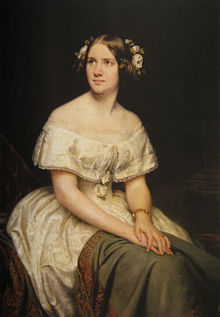
When Jenny Lind, a famous soprano known as the “Swedish Nightingale," sang in Cincinnati, Ohio, in early spring 1851, sitting in the audience was a successful young liquor dealer named Samuel N. Pike. Struck to the core by her singing, Pike, shown left, vowed to use his wealth to build an opera house.
After eight years of selling whiskey, Sam finally had the riches necessary to make his dream a reality. Pike’s Opera House opened in 1859 with a Grand Italian Opera Company performing. Shown right in a cameo view, it was hailed as an ornament to Cincinnati. Featuring a grand stairway and 2,000 seats for patrons, the opera house was the first of its kind west of the Appalachians. Said one observer: “At that time, there was nothing out West that could compare to it.”
 In 1866 Pike’s fancy opera house burned to the ground. As an example of what onlookers called his “colossal wealth,” Pike lost no time in rebuilding. Just a year later a new Pike’s Opera House rose from the ashes. Just as ornate as the earlier building, this one was larger, filling a half block on Cincinnati’s Fourth Street. This gesture earned Pike the dedication of a piece of music called “The Opera March” with a picture of his new opera house on the cover.
  After watching his first theater burn, Pike was no longer alive when in February 1903, his second Cincinnati opera house was destroyed by a fire described at the time as historically the city’s largest. The responding twenty-seven engines companies could not save the structure. But Sam had kept faith with his pledge to Jenny Lind.
 A regional history, commenting on a North Carolina town adjacent to the South Carolina line, concluded: “In a manner of speaking, much of early Hamlet was built on money from liquor production…The Lackey liquor fortune….” Indeed, the day in 1890 when Eli Alexander Lackey settled in Hamlet and opened a distillery made possible the day in 1917 when the famous tenor Enrico Caruso sang in the city’s Opera House.
Lackey and his wife, Ella, dreamed of bringing something cultural to Hamlet with their liquor profits. They decided on contributing an opera house at a property where one of Eli’s distillery warehouses had been located. Building commenced in 1912. As shown here the Lackeys’ opera house originally had a Greek Revival facade with an ornate interior to match.

 The theatre provided a venue for the people of Hamlet to hear lectures by Booker T. Washington and William Jennings Bryan, songs by Jenny Lind, and shows by Buffalo Bill Cody and other traveling entertainers. “And for one glorious night in 1917,” according to an historian, “Hamlet was the center of the musical world as Italian tenor Enrico Caruso performed before a packed crowd….” This performance brought the Lackeys to their pinnacle of prominence.
Unfortunately the glow was not to last. The Spanish flu epidemic of 1918 ravaged Richmond County and caused the governor to put Hamlet and other towns under a strict quarantine. It did not save Eli who succumbed on October 11, 1918. The opera house Lackey financed is now on the National Register of Historic Places. Although its facade was altered to “art deco” in the 1920s, the opera house continues to be in use up to this day. It is a constant reminder to residents and visitors alike of Eli Alexander Lackey and how he used his wealth from selling whiskey to bring culture to his adopted home town.
 The career of Jacob Nunnemacher as a distiller was marked by his many accomplishments, including building a premier opera house in Milwaukee, and one fatal mistake. A German Swiss immigrant, Nunnemacher in 1854 founded a distillery and cattle farm south of the city. Before and during the Civil War, he did highly profitable business in both whiskey and beef.
 With his wealth in 1871 Jacob created the Nunnemacher Block in downtown Milwaukee that included a Grand Opera House. Shown below, the structure was three stories with tall pillars guarding the entrance. The interior was a large open space with a full orchestra level and a balcony, box seats on two sides, rich ornamentation and lighting, and a stage suitable for performing operas, German language productions preferred. Seating more than 500, the theater was the grandest the people of Milwaukee had ever seen.
Four years after the opening, however, Jacob Nunnemacher became caught in what came to be known as the “Great Whiskey Ring.” On one day in May 1875 the Secretary of the Treasury using secret agents from outside his own department directed a series of raids throughout the country, including Milwaukee. They arrested 86 Federal revenue agents and other government officials and 152 distillers and whiskey wholesalers for cheating on their liquor taxes. Jacob Nunnemacher was among them.
Although found innocent of three charges, on a fourth, conspiracy to defraud the U.S. government, Nunnemacher was convicted and sent to prison for six months. Although he was pardoned by President Grant after spending only two months in jail, the experience broke the distiller physically and mentally. At 57 years old, Nunnemacher died the same year as his release. In 1895 the theater he had financed suffered a major fire but was rebuilt by one of Milwaukee’s “beer barons.” Today it is known as the Pabst Theater and is still in operation.
Note: More complete biographies of these three opera-loving whiskey men may be found elsewhere on this blog: Samuel Pike, January 1, 2018; Eli Lackey, July 20, 2018; and Jacob Nunnemacher, March 21, 1912.


