Showing posts with label Jacob Nunnemacher. Show all posts

Thursday, October 17, 2019

Whiskey Men Who Built Opera Houses

Foreword:  While most distillers, liquor dealers and saloonkeepers concentrated their recreational attention on horse racing, prize fighting, and baseball, a handful had a respect for more refined amusements, including the opera.  With wealth from their profits selling booze, at least three, profiled here, were responsible for building opera houses in their communities.  

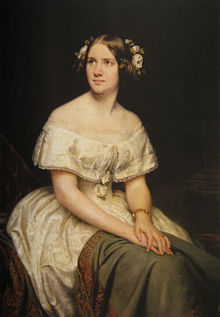
When Jenny Lind, a famous soprano known as the “Swedish Nightingale," sang in Cincinnati, Ohio, in early spring 1851, sitting in the audience was a successful young liquor dealer named Samuel N. Pike.  Struck to the core by her singing, Pike, shown left, vowed to use his wealth to build an opera house.

After eight years of selling whiskey, Sam finally had the riches necessary to make his dream  a reality.  Pike’s Opera House opened in 1859 with a Grand Italian Opera Company performing.  Shown right in a cameo view, it was hailed as an ornament to Cincinnati.  Featuring a grand stairway and 2,000 seats for patrons, the opera house was the first of its kind west of the Appalachians.  Said one observer:  “At that time, there was nothing out West that could compare to it.” 

In 1866 Pike’s fancy opera house burned to the ground. As an example of what onlookers called his “colossal wealth,” Pike lost no time in rebuilding.  Just a year later a new Pike’s Opera House rose from the ashes.  Just as ornate as the earlier building, this one was larger, filling a half block on Cincinnati’s Fourth Street.   This gesture earned Pike the dedication of a piece of music called “The Opera March” with a picture of his new opera house on the cover.   

After watching his first theater burn, Pike was no longer alive when in February 1903, his second Cincinnati opera house was destroyed by a fire described at the time as historically the city’s largest.  The responding twenty-seven engines companies could not save the structure.  But Sam had kept faith with his pledge to Jenny Lind.

A regional history, commenting on a North Carolina town adjacent to the South Carolina line, concluded:  “In a manner of speaking, much of early Hamlet was built on money from liquor production…The Lackey liquor fortune….”   Indeed, the day in 1890 when Eli Alexander Lackey settled in Hamlet and opened a distillery made possible the day in 1917 when the famous tenor Enrico Caruso sang in the city’s Opera House.

Lackey and his wife, Ella, dreamed of bringing something cultural to Hamlet with their liquor profits.  They decided on contributing an opera house at a property where one of Eli’s distillery warehouses had been located.  Building commenced in 1912.  As shown here the Lackeys’ opera house originally had a Greek Revival facade with an ornate interior to match. 


The theatre provided a venue for the people of Hamlet to hear lectures by Booker T. Washington and William Jennings Bryan, songs by Jenny Lind, and shows by Buffalo Bill Cody and other traveling entertainers.  “And for one glorious night in 1917,” according to an historian, “Hamlet was the center of the musical world as Italian tenor Enrico Caruso performed before a packed crowd….”  This performance brought the Lackeys to their pinnacle of prominence.

Unfortunately the glow was not to last.  The Spanish flu epidemic of 1918 ravaged Richmond County and caused the governor to put Hamlet and other towns under a strict quarantine.  It did not save Eli who succumbed on October 11, 1918. The opera house Lackey financed is now on the National Register of Historic Places.  Although its facade was altered to “art deco” in the 1920s, the opera house continues to be in use up to this day.  It is a constant reminder to residents and visitors alike of Eli Alexander Lackey and how he used his wealth from selling whiskey to bring culture to his adopted home town.

The career of Jacob Nunnemacher as a distiller was marked by his many accomplishments, including building a premier opera house in Milwaukee, and one fatal mistake.  A German Swiss immigrant, Nunnemacher in 1854 founded a distillery and cattle farm south of the city.  Before and during the Civil War, he did highly profitable business in both whiskey and beef.

With his wealth in 1871 Jacob created the Nunnemacher Block in downtown Milwaukee that included a Grand Opera House.  Shown below, the structure was three stories with tall pillars guarding the entrance.  The interior was a large open space with a full orchestra level and a balcony, box seats on two sides, rich ornamentation and lighting, and a stage suitable for performing operas, German language productions preferred.  Seating more than 500, the theater was the grandest the people of Milwaukee had ever seen. 


Four years after the opening, however, Jacob Nunnemacher became caught in what came to be known as the “Great Whiskey Ring.”  On one day in May 1875 the Secretary of the Treasury using secret agents from outside his own department directed a series of raids throughout the country,  including Milwaukee.  They arrested 86 Federal revenue agents and other government officials and 152 distillers and whiskey wholesalers for cheating on their liquor taxes.  Jacob Nunnemacher was among them. 

Although found innocent of three charges, on a fourth, conspiracy to defraud the U.S. government,  Nunnemacher was convicted and sent to prison for six months.  Although he was pardoned by President Grant after spending only two months in jail, the experience broke the distiller physically and mentally.  At 57 years old, Nunnemacher died the same year as his release.  In 1895 the theater he had financed suffered a major fire but was rebuilt by one of Milwaukee’s “beer barons.”  Today it is known as the Pabst Theater and is still in operation.

Note:  More complete biographies of these three opera-loving whiskey men may be found elsewhere on this blog:  Samuel Pike, January 1, 2018;  Eli Lackey,  July 20, 2018; and Jacob Nunnemacher,  March 21, 1912.


Sunday, October 29, 2017

Whiskey Men Dealing with “The Whiskey Ring”


Foreword: The Whiskey Ring was a plot of the 1870s involving diversion of liquor tax revenues hatched in St. Louis but also organized in other cities. Distillers and liquor wholesalers paid off government officials, and those officials helped the distillers evade federal taxes on the whiskey they produced and sold.  The perpetrators stole millions. Secretary of the Treasury Bristow broke the politically powerful ring, using secret agents to conduct a series of raids across the country on May 10, 1875. Ultimately, 110 convictions were made and over $3 million in taxes were recovered. This post summarizes the story of four whiskey men whose lives were affected by their involvement with the Ring.

In 1872 Gordon Byron Bingham of Patoka, Indiana, patented an upright tank for holding liquor that he claimed was aimed at preventing “fraud on the revenue.”  Just three years later, as a distiller, Bingham, shown right, was implicated and convicted as a participant in the “Whiskey Ring,” whose sole purpose was to defraud the revenue.  As a result, Bingham ruined himself and the small town of Patoka was thrown “on the downgrade of the stream of time….”

Shown right is the metal tank that Bingham patented in February 1872 to allow federal officers “…an easy means of determining at all times, the exact proof and quantity of the spirits within the tank.”   Ironically it was not long after receiving his patent that Bingham became entangled in “The Whiskey Ring” involving his distilleries in St. Louis and Patoka, near Evansville, Indiana.

After being caught in the Bristow raid,  Bingham initially attempted to stonewall judicial officials but faced with the threat of imprisonment for contempt of court he caved in, withdrawing his claim to his confiscated distillery and whiskey and pleading guilty to all government charges.  More important Gordon became the first and chief witness for the government against other Ring participants, including General James Veatch, the local collector of internal revenue.

Given a hero’s welcome upon his return to Patoka, a hamlet where he provided much of the income with his distillery, the press excoriated Bingham as a man who had committed “…the meanest, most rascally and most mischievous swindling ever practiced in this State.”  Disgraced, headed for jail, and seemingly beset on all sides,  Bingham within a matter of days was dead, passing on January 10, 1876, at the age of 49.  His obituary suggested that, faced with the prospect of the penitentiary, he developed "a form of mania" that rapidly undermined his health.


With its distillery gone, Patoka — an Indian name meaning “log on the bottom” — went into serious decline.  In the early 1880s the following was written about the town, shown here as it looks today:  “Distilleries first made her prosperous, then crooked whiskey sheared her golden locks, nipped her pristine vigor, made her prematurely gray and hurled her on the downgrade of the stream of time from which she is not likely soon to recover….”

When he found that Chicago distillers who had joined the Ring were selling their whiskey much more cheaply than he could, Milwaukee’s Jacob Nunnemacher, a immigrant from Switzerland, soon figured out that the Chicagoans were not paying the tax but bribing the revenue agents sent to collect it.  Unwisely, Nunnemacher, shown right, joined them in the corrupt scheme.

As his bookkeeper put it later:  “He didn’t mind paying a fine now and then or a little protection money to the revenue agents and those higher up.  Everybody was doing it.”  Shown in an artist’s drawing below, Nunnemacher’s distillery was in a rural area south of Milwaukee called Town of Lake.  The site held his Italianate mansion, the whiskey-making plant, and pens for cattle who were being fattened on the spent mash from the distillery.


Caught in the 1875 raid, but loudly protesting his innocence,  Jacob demanded an early trial. That occurred in March of 1876.   The government claimed that he had conspired to manufacture and remove illicit spirits from the distillery.  Although found innocent of three charges, on a fourth, conspiracy to defraud the U.S. government,  Nunnemacher was convicted and sent to prison for six months. 

He spent only two months in jail.  Nunnemacher’s friends, influential Republicans, petitioned President Ulysses S. Grant for a pardon, which he swiftly granted.  Nevertheless, accord to contemporary accounts, the experience broke Jacob physically and mentally.  Only 57 years old, he died the same year as his release from prison. The distillery he founded also went out of business. The buildings were allowed to deteriorate, as one shown here, and ultimately were razed. 

John H. Garnhart was a whiskey man and inventor whose most intense and enduring activity, however, may have been re-inventing himself, changing occupations and locations frequently, and known by at least three names during a foreshortened lifetime of only fifty years.  This talent helped him escape the fates of Bingham and Nunnemacher.

Beginning in 1859 after a move from Denver.  Garnhart was hip deep in the St. Louis liquor trade.  He marketed a highly alcoholic bitters product and patented the bottle, shown right. In 1868 he trademarked a label for a brand of whiskey bearing his name.  Shown here, the anchor design almost certainly was his personal handiwork.  

Seemingly always operating on the edge of propriety Garnhart has been linked with the Whiskey Ring but early on in the conspiracy seems to have sensed that things might go wrong.  He brought in two partners to run his liquor company and gave them full responsibility for its management and finances.  Then he moved to Madison, Wisconsin, living in a mansion home shown in an artist’s rending here.  There he marketed a reaper he had invented, a venture than eventually failed.   In 1874, after a short illness, Garnhart died.

His death may have saved him from a prison term or at least profound embarrassment.  A month later, a new Secretary of Treasury, Benjamin Bristow, took office who set the trap for the St. Louis racketeers and sprang it in May, 1875.  Garnhart’s company was among those where barrels of illicit whiskey and office ledgers were seized.  The two men then operating it were among those arrested in the raid.  Convicted, they were slapped with a large fine and a prison term of one year in the Cole County, Missouri, jail.


The name George T. Stagg on a bottle of whiskey for many years has been a familiar sight in virtually every liquor store in America.  Beyond the name and the brand was a Kentucky-born man, shown here, whose life might be characterized as having achieved his fame amidst a series of trials that he not only surmounted but that actually contributed to his rise to wealth and fame.  Among them was his “blowing the whistle” on the Whiskey Ring.

In the aftermath of the Civil War, Stagg moved with his growing family to St. Louis, where the pre-war shoe salesman met a wealthy local businessman named James Gregory.  Gregory was impressed with the 30-something’s highly-developed sense of organization, meticulousness in keeping records, and leadership qualities.  Together they established a firm they called “Gregory & Stagg, Commercial Merchants and Distillers Agents.”  It meant that Stagg was busy selling Kentucky whiskey in markets throughout the United States.

Stagg’s work brought him in contact with distillers and whiskey rectifiers of St. Louis and other Midwest cities, some of whom were participating in the Whiskey Ring.  He quickly became aware of the scheme and its defrauding of the Federal government of its liquor tax revenues.  Instead of collaborating with the Ring, he alerted honest officials about what was going on and helped precipitate the 1875 raids.

Like many “whistle-blowers”  Stagg himself came under scrutiny from individuals skeptical about his motives, particularly Republicans allied with the Grant Administration.   A suspicious House of Representatives Committee in May 1876 held extensive hearings on the scandal.  An Federal Internal Revenue officer was questioned extensively about Stagg’s role in the affair, with the implication that the whiskey salesman might have been in cahoots with the culprits.

The officer, Elverton R. Chapman, vehemently fended off those innuendoes, testifying that Stagg had tipped him off about illegal whiskey being dumped in a local warehouse and then shipped to New Orleans, and, moreover, had told him whom to call as witnesses.  Chapman asserted:  “The most valuable assistance that we got in St. Louis was from Mr. George T. Stagg, of the firm of Gregory & Stagg,, commission-merchants in St. Louis.  Mr. Stagg is entitled to more credit for the exposure of the St. Louis whiskey ring than any other man that lives.”  This ringing endorsement not only fended off Congressional criticism, it marked another rung in the Stagg’s climb toward whiskey fame.

The Whiskey Ring offered the same choices to each of the four men profiled here.  Bingham and Nunnemacher chose to play ball with the criminals and it cost them both dearly.  While apparently profiting from the fraud Garnhart sidestepped the scheme and, after his death, others “look the rap.”  In contrast to those three, Stagg stood up for honest dealing and helped to bring down the perpetrators.  It helped earn him an honored place in whiskey history. To quote “The Shadow” of radio fame:  “The weed of crime bears bitter fruit.  Crime does not pay.”

Note:  Each of these whiskey men have been profiled at greater length on this blog —  Bingham on April 15, 2017;  Nunnemacher, June 12, 2012;  Garnhart July 20, 2015;  Stagg, April 30, 2016.


Thursday, June 28, 2012

Milwaukee's Jacob Nunnemacher: Caught in the Ring

 One of the earliest distillers to be treated on this blog is Jacob Nunnemacher of Milwaukee, shown here.  Nunnemacher’s career as a whiskey man was marked by his many accomplishments, major mistakes, a criminal conviction, prison, a Presidential pardon and an early death.

Nunnemacher was born in 1819 in the German-speaking area of Switzerland at the town of Teufan, shown here.  In 1841, age  22 and seeking his fortune, he embarked from Le Havre, France, for the United States.   His first two years were spent in New Orleans.  In 1943 he followed other Swiss immigrants to Milwaukee which already had a large German-speaking population.

Almost immediately he opened a meat stall at the public market that sat on the spot of the current City Hall.  His enterprise was an immediate success and he got married the same year.  His bride was Catharina Barjenbruch who herself had recently arrived in the U.S., probably as a serving girl for the family of an immigrant doctor.

When the market was razed to build City Hall,  Nunnemacher moved into a building he now owned in downtown Milwaukee at the current Wells and Water Streets.  His growing family -- four boys and a girl -- lived in two stories above his retail meat market.  As the Nunnemachers grew more prosperous,  Catharina complained about the living quarters.  In response,  Jacob plunked down $25,000 cash to buy a mansion on fashionable  Wisconsin Avenue.  As shown here, he would later turn the first floor of the house into retail space.

In 1854 the Nunnemachers moved south of Milwaukee to an rural area called Town of
Lake.  His property reportedly was obtained as a U.S. land grant.  There he started a cattle farm and, more important, a distillery.   He also built an Italianate mansion, shown here, and moved his family to the site.   Although it was an hour and a half trip by ox cart back to town to transport wine and spirits, the operation allowed Nunnemacher to fatten steers, brought from Texas annually, on distillery slops, the mash left after the alcohol was extracted.  He then sold his beef in his downtown meat market.  The Town of Lake also provided ample wood for fuel.

Before the Civil War,  Nunnemacher found a ready trade both in meat and whiskey.  At the outset of the conflict,  however, the Federal Government slapped a 
$1 a barrel tax on   beer and a stiff $1 a gallon tax on whiskey.  That made drinking beer cheaper to the detriment of the hard stuff and Nunnemacher’s sales suffered.  His distillery profits took a second hit after the Civil War when Congress raised the whiskey tax to $2 a gallon.  Swallowing hard, initially he paid it.

Before long, he and other Wisconsin distillers ran into difficult competition from Chicago distilleries who were selling their booze in Milwaukee for $1.15 a gallon.  Nunnemacher and his colleagues soon figured out that the Chicagoans were not paying the tax but rather paying off the revenue agents sent to collect it.  Unwisely, Jacob joined  them in the corrupt scheme.

As his bookkeeper put it later:  “He didn’t mind paying a fine now and then or a little protection money to the revenue agents and those higher up.  Everybody was doing it.” By this time Jacob’s eldest son, Hermann, was working with him in the distillery and a conduit for his payoffs to federal revenue agents.   With Hermann,  Jacob also created the Nunnemacher Block in 1871 in downtown Milwaukee that included a Grand Opera House, shown here with its stage.  Seating more than 500, it was the grandest theater Milwaukee had ever seen.

The Nunnemachers were now recognized among the business elite in Milwaukee and, indeed, Wisconsin.  A contemporary author says of Jacob:  “His friends were always cordially welcome and he received here friendly calls and visits from numerous noted Milwaukee businessmen, who were pleased with the generous hospitality and charmed and greatly entertained by his witty and humorous conversation.”

The situation, however, was about to change drastically.  In 1868  Congress amended the revenue laws and stiffened the penalties against avoiding the whiskey tax.  No longer was this fraud punishable only by a fine but now it incurred jail time.  Jacob told his friends that he wanted no more part of distilling under the new law.  Early in the 1890’s he ostensibly sold the distillery to the Kinnikinnick Distilling Company, a whiskey rectifier then located in downtown Milwaukee.

Although the terms of the sale were not public, the U.S. government later would claim it was a sham.  Jacob’s home and cattle business was still contiguous to the whiskey-making and he appears to have directed much of the operation, working with the distillery manager.  His  accountant later recounted:  “But he couldn’t stay away from the plant.  And when he was out there, he couldn’t help ordering the men about, just as he always had done.”

Thus it was in 1875 that Jacob Nunnemacher became caught in what came to be known as the “Great Whiskey Ring.”  On one day in May 1875 the Secretary of the Treasury using secret agents from outside his own department directed a series of raids throughout the country,  including Milwaukee.  They arrested 86 Federal revenue agents and other government officials and 152 whiskey men. Jacob Nunnemacher was among them.

Loudly protesting his innocence,  Jacob demanded an early trial. That occurred in March of 1876.   The government claimed that he was a “party of interest” in the operations of the distillery, that he had conspired with the Kinnikinnick manager to manufacture and remove illicit spirits from the distillery, and that his son, Hermann, was the courier for payoffs to crooked revenue agents.  Although found innocent of three charges, on a fourth, conspiracy to defraud the U.S. government,  Nunnemacher was convicted and sent to prison for six months.

Nunnemacher spent only two months in jail.  His friends, influential Republicans, petitioned President Ulysses S. Grant for a pardon, which he swiftly granted.  Nevertheless, accord to contemporary accounts, the experience broke Jacob physically and mentally.  Only 57 years old, he died the same year as his release from prison. The distillery he founded also went out of business. The buildings were allowed to deteriorate, as one shown left and ultimately were razed.

Their father’s disgrace did not stain the Nunnemacher family future.  Two of Jacob’s sons became leading Milwaukee businessmen, engaged in banking, manufacturing and grain shipping.  Interestingly, Milwaukee’s historical accounts of Jacob, his distillery and his accomplishments invariably omit his ignominious end.  To this day Nunnemacher is hailed as one of the City’s business pioneers.  His prison term is not mentioned.