Sunday, November 14, 2021

Dan Call: The Preacher Who Launched a Whiskey Legend

 A Civil War soldier, farmer, store keeper, and lay preacher of the conservative Union Lutheran Church in Lois, Tennessee, Daniel Houston Call, shown here,  might have fallen into the obscurity that history accords most of us, except for one decision.  Faced with the question of hiring and harboring a 16-year-old orphan boy of uncommonly small stature, Dan Call said yes and the rest is history.  The boy was Jack Daniel.

Dan Call himself was an orphan, adopted by relatives as a young boy.  The 1850 U.S. Census found him at age 14 living in Lincoln City, Tennessee, with siblings William, 16; Sarah, 9; and Joseph, 6.  The household was headed by Rebecca Call, 53, likely an aunt.  By the 1860 census, Call had reached maturity, was married with children, farming and running a general store.


Those obligations were not enough to keep Call from hearing the clarion call to arms when the Civil War began.  Tennessee was a divided state, with the Eastern counties harboring pro-Union sentiment throughout the conflict and was the last state officially to secede from the Union.  Although Tennessee provided a large a number of troops for the Confederacy, it also provided more soldiers for the Union Army than any other Southern state.  Call, who owned slaves, chose the Confederate side.


Described as a “sinewy, long-legged fellow with a scarecrow figure who walked with a hint of a strut,”  Call was adept on horseback and knew how to shoot.  That made him eligible to join an elite marauder unit of the rebel army called Forrest’s Escorts, numbering about 100 men over the course of the war.  Their leader was the charismatic and bold Gen. Nathan Bedford Forrest.  Prof. Michael R.Bradley has commented:  “The Escort…was made up mostly of yeomen [farmers], led by wealthier and better educated men.”  And devoted to Gen. Forrest.


Although Call was not among the original members of Forrest’s Escort, most of them recruited in Tennessee, he joined early in the conflict.  He bid good-bye to his wife, Mary Jane (nee Nelson), whom he had married when she was 16 years old, and rode off to the fighting.  Like his companions in Gen. Forrest’s special cohort, Call would have provided his own horse and arms, likely a shotgun that had proved valuable in close quarter fighting.


The Escort would see considerable hot combat throughout the war.  Coll’s first engagement was in December 1862 at Lexington, Tennessee, followed a few days later by a skirmish at Parker’s Crossroads against Union forces led by General Grant. Among the most costly battles was at Chicamauga, Georgia, in September 1863.  Although it was a Confederate victory, the cost in men killed, wounded and captured was devastating. It may be at this battle that Call was among the 1,400 Confederates captured.  His service record indicates he either escaped or was exchanged, returned to the Escort, and is recorded serving with the unit at the time of Forrest’s surrender in Gainesville, Alabama, at the end of the war. 
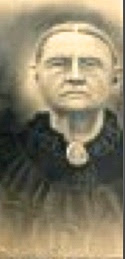

Arriving back in Tennessee, Call found that Mary, shown here, had added a new face to the dinner table.  His name was Jasper but he preferred to be called “Jack” Daniel.  The five foot, two inch, local boy had been recommended to Mary as someone to help her in Call’s absence with the general store and other chores.  Although small, Jack was of sturdy build and energetic.  With three youngsters to look after, Mary jumped at the chance for help and brought the boy into the Call home.  But what would her husband say when he returned? 


Mary and Jack need not have worried.  Although conservative in his views, Dan Call was a strong Christian and believed in helping his neighbor.  Moreover, he was cognizant of having been an orphan himself.  He accepted Jack into their home and became his mentor.  The fighting across Tennessee that devastated numerous farmsteads luckily had left Call’s property relatively unscathed.   Located off the main road and tucked among the hills it had escaped the notice of pillagers.  So too, apparently had the general store under the watchful eyes of Mary and Jack.


Moreover, as a result of Call’s prior good treatment of his several slaves, they agreed to stay as hired hands.  With their future income assured, Dan and Mary set about enlarging their family, eventually producing 18 children, most of whom lived to maturity.  No longer would the simple frame farm house suffice that Call had built for Mary.  Over time Call would expand the structure into a multi-roomed Greek Revival structure.  It can be seen in the photo here.


To feed and clothe the many offspring Call also could rely on profits from a distillery he had built behind his general store before riding off to war.  It had apparently had been left idle during the conflict but the machinery was still intact.  The distillery was conveniently located on Louse (aka Stillwater) Creek, an odd name for a pristine stream that gushed from springs in a nearby glade.  It kept an ideal temperature and flowed in a stream a few yards from the Call homestead. With the abundance of corn grown on the family farm and some expertise at distilling, the prospects for a “cash cow” were evident.


The problem was some diffidence on the part of Dan Call.  Whether he received his religious “calling” before or after his Civil War experience is not clear.  He had become a lay preacher in a rural Lutheran Church not far from his home, a rustic house of worship that likely resembled the picture here.  If he had done any preaching during his time with the Escort, it was informal.  Although prayers were offered in the unit, Forrest was not favorable to an officially appointed chaplain.  Back home, Call’s congregation would have been small.  With its roots in Germany and Scandinavia, Lutheranism had only a small foothold in Central Tennessee compared to Baptists and Methodists.


Lutherans were known to be ambivalent about alcohol.  The typical German was fond of his beer and, perhaps “schnapps” liquor.  Yet many fellow Protestants (unlike Catholics and Jews) were avid prohibitionists.  This same uncertainty seems to have infected Dan Call.  Although his distillery was making whiskey and he was selling it, he forbade drinking on his farm or in his general store.  As Lutherans increasingly went “dry” Call obviously knew that someday soon he would have to give up making whiskey or lose his ministry.


Shown here in maturity, Jasper/Jack Daniels, although raised a Baptist, had no such compunctions.  He was drawn to the distillery.  In his biography of Daniel, Author Peter Krass observes:  “As young Jack mulled over the contraption, he quickly grasped that whiskey was a means to escaping poverty.  He determined to learn the noble art of distilling.”   Faced with the importuning of the young Daniel, Call instructed his African-American former slave and master distiller, “Uncle” Nearis Green,  to teach the boy all he knew about making whiskey.  [See my post on Nearis Green, August 21, 2018.] 


Uncle Nearis only recently has been released from the obscurity imposed by racial bias to recognition of his training of Jack Daniel and the origin of famed Tennessee whiskey.   Although there are no known photographs of Green, a recent image depicts him, face turned away, inspecting the product of a still.  The rest is history as Jack Daniels took the recipe to heights previously unknown.


Meanwhile in the Call household, a new birth was occurring on the average of every other year.  Dan found his congregation dwindling as the highly conservative Union Synod of Lutherans to which he belonged splintered on issues of prohibition and the validity of the Southern cause.  To keep his flock he gave up distilling and selling liquor to Daniels but managed sufficient prosperity to increase his land holdings and see his children, four of whom died in infancy, find places in post-bellum Tennessee society.  The photo below shows the aging Dan and Mary seated in front of their home, surrounded by family members and family dogs.  Call’s ample beard has turned white.


The man responsible for launching Jack Daniel, Dan Call died at the age of 67 in August 1904.  He was buried in Mulberry Cemetery in Lincoln County, Tennessee, not far from where he had spent much of his life.  Mary would join him in an adjacent grave 18 years later.  Despite bearing 18 children in a locale where medical facilities were virtually non-existent, she lived to be 91.


Note:  This post is drawn from a variety of sources.  Important among them are“Blood & Whiskey:  The Life and Times of Jack Daniel,” by Peter Krass, Castle Books, 2004. Krass gives Call considerable attention.  Supplementing Krass’s treatment of Call’s Civil War experience was “Nathan Bedford Forrest’s Escort and Staff,” by Michael R. Bradley, Pelican Publishing, 2006.  Many have claimed credit for Jack Daniels learning how to make whiskey.  To Dan Call and Nearis Green go the laurels.


Wednesday, November 10, 2021

Herrmann Bros. Were Louisville’s “French Connection”


“Though citizens of America and lovers of this country, we join with our adored France in all that makes her great and glorious and in all that might conduce to her benefit.  If she smiles in happiness, we smile with her; if she weeps with sorrow, we too weep.”


Those remarks, spoken on Bastille Day 1901 to a gathering of Kentucky Francophiles, were from Michel Herrmann, a man who knew weeping well as a surrendering soldier during the 1871 French defeat in the Franco-Prussian War.  By the following year Michel was embarked across the Atlantic and new opportunities.  With help from his younger brother, F. Joseph, shown here, Herrmann Bros. Company would become a leading Louisville liquor house.  The pair, however, never forgot their roots in Alsace-Lorraine and France.


The sons of Francois and Marie Catherine (Hincker) Herrmann, Michel, born in 1850, was five years older than F. Joseph, who arrived in the U.S. not long after his brother.  The early years of the Herrmanns’ American careers have gone unrecorded but evidence from the 1880 census indicates that by then both brothers already were active in the Louisville whiskey trade.


Herrmann Bros. first appears in Louisville business directories in 1884, located at 531 Market Street.  Over the ensuing seven years, their enterprise apparently flourished to the point where they needed a larger space.  In 1901, the company moved to 234 Sixth Street.  As shown on the letterhead above, they called their enterprise, “Importers of Fine Wines and Liquors…Distillers & Wholesale Dealers in Fine Kentucky Whiskies.”  A photo their liquor house shows it to be a four story building of considerable size.  Piled high on the front sidewalk are cases of liquor as well as large and small barrels, indicating a busy trade.  Among the three men standing in the doorway likely are Michel and F. Joseph.


During the early years of their business, the Herrmanns were not distillers, but rather “rectifiers” who blended whiskeys from outside providers to achieve a particular taste, smoothness and color.  These they were selling at wholesale. They were bottling their blends in ceramic jugs of varying sizes, initially many of them covered with an Albany slip glaze and the label “scratched” into the surface.  This process, done by hand, could lead to botched displays, e.g. the “W” on the jug left. 


As they were building their reputation as a Louisville liquor house, the Herrmann’s were having personal lives that substantiated the axiom that Frenchmen are lovers.   Between the brothers they fathered 23 children.  The first to marry was F. Joseph in November 1876.   His bride was Theresa Meffert of Louisville, a woman of about the same age, who was the daughter of German immigrant, William (aka John) Meffert.  Together this couple would have 13 children over the next 22 years.  Michel was married in 1884 to Catherine “Carrie” Balmer, daughter of Swiss immigrants Wilhelm and Magdalena Balmer.  Carrie was a local girl seven years younger than Michel.  Over the next 20 years they would have ten children.


In addition to growing his liquor business and his family, Michel founded and led a local organization called “Cercle de Union Francaise" to foster French cultural and social events.  The annual highlight was the Bastille Day celebration where Michel traditionally was main speaker.  The menu for the 1909 event included as entrees sweetbreads, braised beef cutlets with mushrooms, roast chicken and fried black bass, accompanied by, no surprise, champagne almost certainly furnished by Herrmann Brothers.   Moreover, Paris had taken note of Michel’s efforts and named him French consul for Kentucky.   The result was a steady stream of overseas visitors and immigrants to his doors.


Meanwhile the Herrmanns were pressing ahead in liquor-centered Louisville to become a more “prominent factor in the trade,” as the Wine & Spirits Bulletin said of them.  As rectifiers they had become increasingly aware of the difficulty of obtaining sufficient whiskey stocks for their blending operations.  The emergence of trusts had pinched off sources and raised prices for “raw” whiskey.  Early on they had contracted with a small distillery in Nelson County, three miles south of Bardstown, Kentucky.  Built in 1780 with only a 20 bushel daily capacity, it was called the Pearl of Nelson Distilling Company.


Likely contracting for the annual output of the distillery, Herrmann Bros. by 1898 were advertising as distillers and had made “Pearl of Nelson” sour mash whiskey their flagship brand, as shown on the crate above.  They advertised it vigorously to their customer base in local newspapers.  In 1916 an even more attractive prospect opened near Bardstown when the Mattingly & Moore distillery went bankrupt.  The Herrmanns offered the creditors a bargain basement $18,000 to take over the operation of the distillery and an additional amount to pay for 1,500 barrels of 1911 and 2,400 barrels of 1912 whiskey held in the company warehouse.  “…Herrmann Bros. became sole controllers of distillery, the brand, and the whiskey,” noted the Bulletin. 


This facility had a production capacity far beyond the Pearl of Nelson Distillery. While the still itself was frame, the distillery boasted five bonded warehouses, according to insurance writers records, all of them of brick, stone or iron-clad with flame resistant roofs, and a sixth “free” warehouse, also fireproofed. The brothers pledged to keep the Mattingly & Moore name and aggressively distribute M&M whiskey, a popular brand before the bankruptcy.  After decades at toiling in the shadow of distillery-owning “whiskey barons,” the Herrmann’s  now could be counted among the royalty. The governor bestowed on F. Joseph the title of “Kentucky colonel.”


Unfortunately these French immigrants had little time to savor their success.  Although Michel continued annually to give the keynote address on Bastille Dayand bear the title of French consul well into that decade, his health was faltering.  In June 1019, at 69 he died of “pernicious anemia” in the capacious home at 1335 Hepburn Avenue he had purchased for his large family.  His Louisville Courier Journal obituary called Michel “A prince among men, he was generous to all charities, never asking about race, creed or color…”  After funeral services at Hoy Trinity Catholic Church, he was buried in Louisville’s St. Louis Cemetery.


Although Michel must have known National Prohibition was coming, he did not live long enough to see the liquor house he had co-founded come to an end after 43 years in business.  Now Colonel F. Joseph, shown here as he aged, was left to shut down their enterprise.  Providentially years earlier he had branched out into other commercial activities.  At his death in March 1935 at age 86,  F. Joseph was vice chairman  of the Liberty National Bank & Trust Company and treasurer and a director of the Washington Mutual Fire Insurance Assn.  The brothers are buried in adjacent and matching graves in St. Louis Cemetery.  Their French connection has been left unbroken.


Note:  As so often occurs, I was brought to the story of the Herrmanns and their ascent into Louisville whiskey aristocracy by seeing at auction one of the “scratch” jugs shown here.  Because the brothers each have extensive material on Ancestry, coverage in Louisville newspapers and the Wine & Spirits Bulletin, it was possible to follow their careers. Initially I was unable to find any image of Michel Herrmann until August 2024 when Christopher Golski of Phoenix contacted me, sending a newspaper clipping from the Louisville Courier Journal of August 10, 1914, with his photo, shown below.  Michel Herrmann was Christopher's great great grand uncle, through his mother.  My great thanks to him for the picture.


.  


Saturday, November 6, 2021

Three on Prescott, Arizona’s, “Whiskey Row”

 Foreword:  The main thoroughfare of Prescott, Arizona, Montezuma Street, is called “Whiskey Row” because of the large number of saloons that once lined it. Beginning in the mid-1800s the street, shown below, harbored a considerable number of drinking establishments.  After a disastrous fire wiped out much of Whiskey Row in July 1900 and was rebuilt, the numbers actually increased.  At one point the strip boasted at least 40 saloons.  Here is the story of three “whiskey men” who helped make Prescott’s Whiskey Row the legend it is today.

The Original Whiskey Row

Born in New York about 1829, Dan Thorne came West about 1850 with thousands of men joining the California Gold Rush and later migrated to Arizona.   Although Thorne seem to have prospered through his mining enterprises, he also saw the possibilities for riches in operating a saloon in Prescott.  As early as 1869 he was associated with the Palace Bar and the Cabinet Saloon, two of Prescott’s most famous watering holes.  With a partner he built a large frame building and opened the Cabinet, described as a “new resort.”  The owners displayed minerals and published ads inviting prospectors to bring in specimens for cash.


Although over the years it was the scene of a few violent encounters,  perhaps the best story from Thorne’s Cabinet Saloon occurred on a snowy night in January 1898 when a veiled woman dropped a baby girl on the bar and then disappeared out the swinging doors into the dark.  The local Courier newspaper told it this way:  "All other business was brought to a standstill while the crowd gathered around the bar where the little one had been deposited. As it was impossible for all to get near, one of the employees got up and explained the situation and read the note left with the baby." 


The unsigned note said the father, a miner named William Bell, had abandoned the baby, and the child was now being returned to him by way of the Cabinet, a place he frequented.  Bell was not there that night, but the miners, ranchers and railroad hands present, their emotions apparently loosened by whiskey, were so taken with the chubby, cooing infant that they cooed right back at her and some wanted to adopt her.  A local probate judge named Charles Hicks cradled the infant in his arms and took her home to his wife. They decided to called her Violet.  This orphan girl, legally adopted, became Violet Hicks, learned to ride horses before she could walk and found a loving home with a previously childless couple.


On the morning of July 5 a fire broke out in the kitchen of Thorne’s saloon.  According to the July 7 Arizona Gazette: “Volumes of smoke poured from the doors and windows and soon the flames were seen issuing not only from the roof of Thorne’s, but from the eaves of the neighboring buildings so rapid was their progress.”   A saloon across the street had to be dynamited to prevent the flames from jumping across.  The explosion was a success and that block was saved.  But the fire had roared down the other side of Whiskey Row destroying not only the Cabinet Saloon but the Palace Bar and other establishments.  Thorne and other saloonkeepers set up shop in tents.


Almost immediately Thorne with others agreed to collaborate on rebuilding the block including both the Cabinet and Palace Saloons. Instead of constructing again with combustible wood, the new buildings were made of brick, granite and iron.  The new Palace was estimated to cost an unheard-of $50,000 and restoring the Cabinet likely involved a similar figure.  Over the next several years Thorne, now in his 70s, sold his Prescott saloons and moved back to New York City where he died in March 1913.


Whiskey Row Rebuilt


Unlike Thorne, Hugh McCrum was a rich man by the time he arrived in Prescott.  This immigrant from Northern Ireland was virtually penniless when he reached America in 1850 and went west to find his fortune.  Although his original stake came from mining, McCrum also had a penchant for running saloons, selling liquor in Western towns like Virginia City, Nevada;  Tombstone, Arizona,  San Francisco and Los Angeles.


McCrum increasingly was drawn to Arizona, particularly the area around Prescott.  There were two attractions, mining and saloons.  From early on McCrum was checking out area mines, telling newsmen that he believed the mineral resources of Arizona to be almost inexhaustible and would prove equal if not superior to the mines of California.   He also was calculating the profitability of the numerous saloons on “Whiskey Row,” shown here, eventually buying up several with his riches.


The Phoenix Gazette called him “…One of the oldest mining men on the coast and his judgment is taken above all.  He has traveled through the mining regions on the coast for thirty years and none are better known.”  McCrum had reported to the paper on his mining efforts twenty miles south of Prescott, claiming his works were “running night and day on good gold ore.”


Famous for his peripatetic ways, roaming the West, McCrum seems to have been popular in Prescott.  When he married for the second time in Los Angeles in  1885, the Prescott Journal Miner hailed his new bride as “a most excellent lady” and joined McCrum’s reputed “army of friends in Arizona,” in extending congratulations. Meanwhile he was not neglecting his mining interests


During this period McCrum changed his official residence to Prescott.  Although he continued to own drinking establishments on Whiskey Row, he kept strong ties in California where he owned considerable property.  I can find no report of how his saloons fared in the 1900 conflagration.  McCrum was in San Francisco when he died at the age of 66 in July 1902.  Shown here is his mausoleum.


When F. G. McCoy came to Prescott in 1902, the rebuilt Whiskey Row already was in full swing. With a relative, McCoy established the Wellington Saloon at 136 South Montezuma, between the Palace at 122 and the Owl Saloon at 138.  Unlike many of his fellow Whiskey Row neighbors, McCoy was not just selling liquor as received from wholesalers.  He also was decanting whiskey into flask-sized bottles for retail sales, shown here.


Each Whiskey Row saloon had its own regulars — cowboys, miners, soldiers or businessmen — and each had its own attractions.  McCoy’s Wellington Saloon encouraged gambling on premises.  A local artist caught the action of a game of chance there. From the dress of the gents in the Wellington picture, McCoy’s clientele were from the local business community.  They were shown playing faro.  That was a card game, more related to blackjack than poker, popular in the Old West for its fast action, simple rules, and better odds than other games.


McCoy’s tenure at the Wellington, however, proved to be relatively short.  By 1907, the saloon was no longer listed in directories.  The reason may have been Arizona’s off-and-on flirtation with prohibiting alcohol sales.  In 1901 a “local option” law was passed permitting individual counties and towns to decide on how to regulate alcohol.  Although no evidence exists that Prescott went “dry,” McCoy may have felt it affected his business in adjacent towns.  The law was repealed in 1909.


By 1912 McCoy surfaced again in the saloon business.  This time he was recorded as running a Prescott saloon with F. C. Whisman.  Frank Whisman had been a Prescott bartender, likely working at the Wellington Saloon.  The partners called their enterprise simply “McCoy & Whisman.”  It was a short-lived drinking establishment, forced to shut down when Arizona voters in 1913 approved a statewide ban on alcohol that went into effect on New Years Day, almost six years before National Prohibition. During the twenty superficially “dry” years in Prescott, F. G. McCoy faded into the mists of time. 


Note:  More extensive posts on each of these three men may be found elsewhere on this website:  Dan Thorne, August 26, 2016; Hugh McCrum, September 19, 2016; and F. G. McCoy, April 4, 2016.


Tuesday, November 2, 2021

J.W. James: “Noblest Man” of Crab Orchard KY


“On February 25th, near the somber hour of midnight, the noble and generous spirit of J. W. James, the noblest man that ever lived in all the tide of Time, took its flight from his elegant home to a far more splendid mansion in the sky.”—The Stanford KY, Interior Journal , March 2, 1906.


Thus did a local newspaper open its long laudatory obituary of John William “Willie” James, shown here.   As will be seen, this eulogy spared no adjectives in praising James’ virtues.  Missing from the entire encomium, however, was even a single word about the key to the Kentuckian’s wealth and philanthropy:  James made his money distilling and selling whiskey.


From an old and distinguished Kentucky family, James was the great grandson of   John M. James, a soldier of the American Revolution, a Virginia pioneer into Kentucky, a minister of the Gospel and an early local judge.  His grandfather, Joseph M. James, was a Baptist preacher and pastor of several central Kentucky churches.  Shown here, Joseph was known for building the Flat Lick Stone Church and additionally was the grandfather of outlaws Frank & Jesse James.  


Our subject’s father was George W. James, a reasonably affluent farmer who at 37 had married Willie’s mother, “Lizzie” Bobbitt when she was 19.  Lizzie is shown here in maturity.


The boy Willie appears to have had more than the typical education offered to Kentucky youth of that era, attending Georgetown (KY), the first Baptist college west of the Appalachian Mountains.  There he became known, according to his obituary, as “a fluent talker, an excellent penman, and an accurate and rapid accountant.” This latter skill found him early employment in Stanford, Kentucky, at a bank owned by a retired physician, Dr. J. B. Owsley.  


Although accounted a success in banking and a confidant of Owsley, James had his attention fixed on a town thirteen miles to the south of Stanford called Crab Orchard, where its springs were known for the therapeutic value of their minerals. Crab Orchard salts were much ballyhooed:  “They are pronounced to have a specific action on the liver, joined with good tonic properties, being the only salts known in the world with these valuable qualities. They are specially recommended for patients suffering from Dyspepsia, Biliousness and Piles, and for persons who indulge in strong alcoholic drinks.”


As the result of active advertising beginning about midway in the 1800s and extending into the 20th Century, Crab Orchard, as the illustration above indicates, was “booming.”  Sited near the end of the Logan Trace of the Wilderness Road and a stop on the Louisville and Nashville Railroad, the town abounded in tourists.  Hotels and tavern flourished.  What better place, thought Willie James, than Crab Orchard for a distillery.


There already was one near the town, called the Crab Orchard Distillery (RD#81, 8th Dist.). Founded in the 1880s, It was for sale in 1892.  According to insurance records, the property included the still and two bonded warehouses of frame construction and shingle roofs standing about 10 feet apart.   North of them by 150 feet was a cattle shed where cows were fed on spent mash from the distilling process.  The structures all were of frame construction.  Likely having some experience in making whiskey, James bought the distillery.


James marketed his liquor as “Crab Orchard Whiskey,” selling it in ceramic jugs like the two shown below.  The first ceramic covered with Albany brown glaze has the label scratched in the surface, indicating it may be an early example.  A second jug indicates a more sophisticated look.  It is covered in Albany slip white glaze with black letters applied with a roller and baked on.  Lest there be any mistake on the origin of the contents, James has added the slogan “made in old Kentucky.”


Working hard to expand his sales, the distiller would find that selling whiskey as prohibitionary forces intensified would have its perils.  In an attempt to reach into “dry” Kentucky counties with his advertising in 1897 James printed up order blanks on post cards that he distributed widely in nearby Rockcastle County, one that by “local option” had banned alcohol.  A liquor sale resulting from that outreach brought his arrest and conviction before a county court.  James appealed and a higher court ruled that the transaction essentially had taken place in “wet” Frankfort County.  James’ conviction was overruled and he was free to continue to make his postcard sales.


Meanwhile Willie was having a home life.  He was twice married.  His first wife was Mattie B. Evans, a local woman.  Shown here, she was the daughter of George W. Evans and likely a relative of Dr. Owsley.  After Mattie’s early death he married Margaret Buchanan, her father George cited as a noble old Scotsman. “Both wives were most excellent women of the first families,”  commented his newspaper eulogy.  There were no children from either marriage.


The cause of James’ early death at 45 years, so far as I can find, has gone unrecorded.  His obituary suggests that his last illness left him unable to eat, possibly a throat cancer.   He died on February 25, 1906 and was buried in Crab Orchard Cemetery in the shadow of King’s Mountain, where his great grandfather is said to have fought during the Revolution.  


The extravagant praise heaped on J.W. James can seem puzzling.  Here was a man who ignored his Baptist heritage and education by making and selling whiskey.  Moreover, he based his operation near a town where many “people who indulge in strong alcoholic drink”  retreated to free themselves of the effects of liquor, not to be tempted to consume it.  Finally, when finding a loophole in the law that forbade sales of alcohol in an adjoining county, James had taken full advantage of the opportunity to exploit it.  Should we take this editorial haliography with a dose of salts?


The answer lies in Willie James’ generosity.  According to his eulogist:  “His place here can never be supplied. His fortune was ample, his cash capital in the thousands, and his pockets always full to meet the demands of the borrower and the beggar…. He gave more to preachers, churches, Sunday schools, Christmas trees, and to feed and clothe the poor, than any other man in Lincoln County.”


One specific example was provided to illustrate James’ character.  “On one occasion, a poor destitute man, (William Kidd) with a withered arm, passing his place of business with an empty meal sack on his shoulder, and a coffee-sack in which he had three hens, the only property he had in the world, stopped in to warm. Willie said…How are times with you? [Kidd] Might hard. I have in my coffee-sack my only three hens. The only things I have in the world. I am taking them to the store to buy me some meal and coffee. [James] Look here at this paper and see what your hens are worth in the market – 68 cents a piece. Take them back home to lay you some eggs, and take this dollar to buy you some coffee and meat, and take your meal sack up to my miller and tell him to fill it as full of meal as he can tie it.


At James’ funeral the minister, Rev. O. M. Huey offered a a verse from his own pen to the large crowd that had gathered to pay respects to a man hailed as “…in many qualities the grandest man that ever moved in the track of time.”:


One by one our friends depart,

Who has not lost a friend?

There is no union here of hearts,

But that union has an end.

Farewell, dear Willie, we leave thee

With the new-fallen snow for a winding sheet,

And cold, bleak winter for a bier;

And every clod beneath the mourner’s feet

Moistened with a tear.


After James’ death the Crab Orchard distillery passed through several hands until shut by National Prohibition in 1920.  With Repeal, however, the earlier popularity of the label caused its revival.  Under the auspices of the American Medicinal Spirits Company the brand was heavily advertised with an “Old South” motif before finally disappearing.


Note:  As so often happens, it was the sight of a Crab Orchard whiskey jug that put me on the track of J.W. “Willie” James.  The extensive and vivid obituary that appeared in the Interior Journal newspaper of Stanford, Kentucky, on March 2, 1906, cemented the idea that James was a good subject for this blog.  The fact that nowhere in his obituary is it even hinted that the subject sold whiskey should be no surprise.  It was similar to the “silent” treatment of other whiskey men featured here.