Friday, July 15, 2022

The Life & Love of H.S. Barton — Kentucky’s Erudite Distiller


Educated at leading American universities in multiple areas of engineering and earning a law degree, Henry Shepard “Harry” Barton likely was the most highly educated distiller in pre-Prohibition Kentucky and possibly America.  Moving from academia to making whiskey, Barton is said to have studied hard in order to learn proper distilling technique.  But what had Barton’s education taught him about romance?


Harry Barton was born in Louisville, Kentucky, in October 1873, the son of Frances Pierce and Samuel Bailey Barton.  A prosperous farmer, the father had been born in Pennsylvania from a family that could trace its ancestry back to an officer in the Revolutionary War.  As Kentucky opened its lands to settlers from the East, Samuel migrated there and claimed a substantial acreage of fertile farmland.  Harry’s mother was a New Yorker who had married Samuel about 1860.  Over the next 15 years the couple would have three children, daughters Mary and Atlanta, and a dozen years later, Harry.


From the beginning the parents apparently recognized that the boy was gifted with unusual intelligence.  At a time when most farmers’ sons quit school at 16 or earlier, they mustered the resources to send the boy through secondary education and onto some of America’s most prestigious universities.  After graduating from the University of Louisville, Harry studied electrical engineering at Rose Polytechnic University in Terre Haute, Indiana, shown here. That was followed by courses in civil and mechanical engineering at the University of Michigan in Ann Arbor.  By this time Samuel Barton had died and some of his estate may have settled on Harry. Still collecting knowledge, the youth then went east to Cornell University in Ithaca, New York, where he earned a law degree.  He was admitted to the Kentucky bar in 1900 at the age of 27.  


There is no indication that Harry Barton ever practiced law.  By now related through marriage to one of Kentucky’s premier whiskey making dynasties, he gravitated to distilling.  His sister Atlanta had married James Thompson, an Irish immigrant whose cousin was George Garvin Brown [See post on Brown, January 9, 1920]. With help from Brown, Thompson opened a liquor house in Louisville, purchasing bulk whiskey and creating a blend he called “Old Thompson.”


In order to assure a continuing supply of whiskey for his brand Thompson was on the lookout to buy a distillery of his own.  The opportunity came when Richard  Monarch, a Kentucky “Whiskey Baron” with lavish spending habits, found his debts exceeding his assets by $1 million dollars ($25 million in today’s dollar) and declared bankruptcy. [See post on R. Monarch, Jan. 4, 2017.] In 1901 Thompson bought the Monarch Distillery in Owensboro, Kentucky, and promptly asked brother-in-law Harry to take charge.   Despite Barton’s lack of experience in the distilling industry, Thompson was banking on his intelligence and studious temperament to carry the day.  He had made a wise choice.


Barton promptly moved from Louisville 105 miles west to Owensboro.  There he found a distillery with a mashing capacity of 750 bushels per day that was suffering from several years of uncertain management — and went back to school:  “To perfect himself in the distilling technique and in the knowledge of fermentology, Mr. Barton studied and worked under the direction of eminent chemists.”  Now known as The Glenmore Distillery, the facility under Barton’s care quickly gained a reputation for making high quality whiskey.  The facility became one of the largest distilleries in Kentucky.  Shown below, it was said to be capable of producing 720 barrels of whiskey a day.


This quantity of production made possible a blizzard of new brands for Thompson, including “Owensboro Club,” “Anchorage,” “Old Cabin Brooks,” “Old Happy Days,” “Kentucky Midland,” “Old Prescription,” “Kent,” “Tom Hardy,” “Two Naturals,” and “Short Horn Club.”  In tribute to Harry’s success another brand was named “H.S. Barton.”  Labels such as “Kentucky Beauty” and “Kentucky Tavern” would be credited to “H.S. Barton, Distiller.”  Harry was advanced to vice president of Thompson Distilling, a position he held for the rest of his life.


Despite his growing wealth and prestige in the Kentucky distilling community, Barton must have felt something missing in his life:  the companionship of a woman.  Living in a rented room in an Owensboro boarding house, he went home at night to a solitary and likely lonely existence.  Enter Anne Lee, shown here.  Anne was the daughter of Joseph Lee, the mayor of Owensboro from 1884 to 1890.  Three years younger than Barton, she worked as a stenographer and clerk in her father’s insurance business.


When and where the couple met is lost in the mists of history.  The romance that ensued, however, would be a lasting one.  Yet for unexplained reasons the couple never married.  Early in the 20th Century, a liaison such as theirs must have caused considerable consternation and disapproval in Owensboro.  Two biographies by descendants on Ancestry state that Anne was Harry’s wife.  The distiller’s obituary in the local newspaper indicated — correctly — that bachelor Bolton never married.


The photograph above indicates the aplomb with which both families apparently accepted the relationship between the two.   It shows four adults sitting together obviously having a good time.  At left is Harry Barton who is holding the arms of his sister, Atlanta.  Facing her is a smiling Anne Lee, backed by her married sister, Forrest Lee Sweeney.  It appears that whatever the relationship between Harry and Anne, it was all in the family. 


Shown left, Barton branched out into other activities.  Major operations like the Glenmore Distillery used thousands of glass and ceramic containers monthly.  Kinks in the supply lines could cause serious disruption in production and sales.  Apparently having difficulty receiving the quantity, and perhaps the quality of whiskey jugs required, Barton founded the Owensboro Clay Products Company.An outdoorsman, he also undertook the promotion of a small lake as a private retreat about 25 miles from Owensboro.  Shown below, the place was known as the Indian Lake Club.


Unlike the vast majority of other distillers who lost their livelihood with the coming of National Prohibition, Barton stayed engaged in making whiskey throughout the 14 “dry” years.  Federal regulations authorized six licenses to continue to make whiskey for “medicinal purposes.”  The Glenmore Distillery in Owensboro was fortunate to obtain one of them.  Throughout Prohibition, local directories continued to identify Barton as “distiller.”   With Repeal in 1934, he once again moved to increase production.


The era of Repeal, however, was not without its challenges.  In 1938 a fire virtually gutted Glenmore Distillery.  Four warehouses, the bottling house and a shipping building were destroyed, 33,000 barrels of whiskey burned and a substantial stock of bottled goods lost. The flaming whiskey set the Ohio River on fire and spread the conflagration to the Indiana shores, incinerating several barns.   Under the guidance of Barton, Glenmore survived.  The distillery itself was saved and quickly resumed production.  To prevent future disasters the warehouses were rebuilt a distance from the main plant.  Dikes were built along the river to prevent fiery spillage from reaching shore. 


As he aged, Barton’s health declined although he continued to hold the title of vice president of the Thompson company.  In early December 1941, after an extended illness, he died and was buried in Louisville, the city of his birth, in Cave Hill Cemetery, a place of rest for many of Kentucky’s “Whiskey Barons.”  Shown here is the tall obelisk that marks his grave.  Anne Lee, who died 15 years later, never having married, is buried separately at the Rosehill Elmwood Cemetery in Owensboro.


Whatever the arrangement between Harry and Anne may have been in life, the provisions of Bolton’s will left no doubt of the bond between them.  The legal document revealed:  “Paragraph 2 of the will establishes a trust with a life estate in one Anne Lee.”  While she lived, Harry’s entire inheritance was hers.  Bolton’s next of kin were twelve nephews and nieces, all of whom might have expected a bequest.  Yet they made no move to challenge their uncle’s will, indicating their recognition of the important role Anne Lee had played in Barton’s life.


Note:  This post, including images, was gathered from multiple Internet sources.  Barton’s obituary from the Owensboro newspaper was particularly helpful as was material on the Barton “find a grave” site.


Addendum:  Just one day ago this Internet site reached the mark of 1.3 million “hits” from viewers worldwide.  Once I would have thought this an impossible number, but it more than validates my belief that many individuals are interested in the universe of distillers, dealers, brokers, saloonkeepers and bartenders who personified the American whiskey trade in the days before National Prohibition in 1920.










Monday, July 11, 2022

J.P. Lightner — A Showboat Captain Comes Ashore

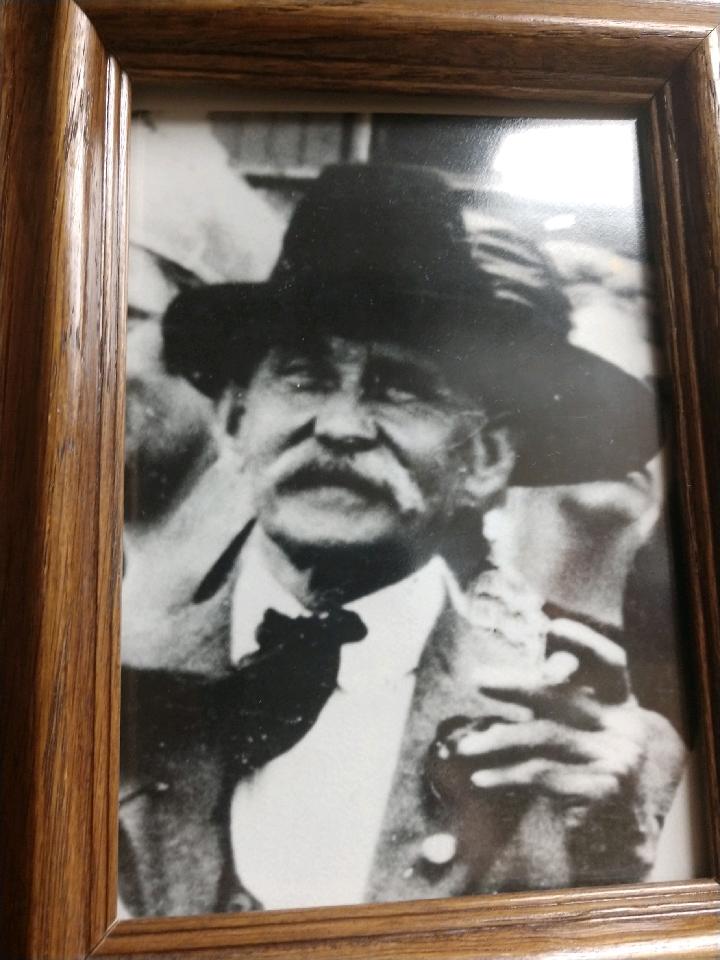
 In the early 1900s a 27-year-old blacksmith named Jefferson Price (J.P.) Lightner commissioned a showboat seating 300 patrons and as its captain plied the lower Mississippi River and Louisiana bayous bringing food, libations and entertainment to the locals.  Shown here, cigar in hand and very much the impresario, Lightner subsequently sold the boat in favor of founding the river community of Illmo, Missouri.  In coming ashore he brought similar attractions, including liquor, to the new town.

Called “Cap” for much of his life, Lightner was born in December 1863 in Lewis County Missouri, the son of Olivia Spence and Montgomery G. Lightner. His father was a blacksmith who moved frequently from town to town before he died in 1880.  Jefferson then was only 17.   The son took up his father’s trade, in 1889 recorded as a blacksmith in Quincy, Illinois.


How Lightner in so short a period could move from shoeing horses to owning and operating a showboat has not been adequately explained.   Likely constructed in one of several shipyards along the Mississippi, the craft had to be built to owner specifications, reflecting the degree of interior luxury.  The typical steamboat, in current dollars, cost about $500,000.  Contrary to popular notions, as depicted in the illustration here, showboats did not have their own locomotion because  boilers took too much space away from entertainment uses.  Instead the craft were pushed by regular steamboats.  


Cap’ named his boat “Lightner’s Floating Palace” but after he sold it new owners renamed it the “New Era Floating Palace,” as shown in the photos above.  The “pusher” boat was the “Mary Stewart” out of Cincinnati.  But how did Lightner, from a working class background, get the money to build a “floating palace,” termed a “major boat of the period”?  The answer is not evident but may have something to do with his marriage in 1894 to Rosa Lee Corkins in New Madrid, Missouri, another Mississippi River community.  She was 19; Lightner was 31.  Rosa Lee’s father, Fred, an immigrant from Ireland, may have been the source of some of the money.

However the financing worked, Lightner’s tenure at the helm of the show boat was no more than four or five years.  He and subsequent owners featured music and vaudeville acts.  The photo above of the showboat has a band assembled on the front deck.  Note that the ensemble is made up of both men and women, most of whom would have other duties aboard such as waiting tables, cleaning, loading supplies and other the menial duties required to keep things shipshape.  Staff turnover must have been frequent.  A 1908 ad by a subsequent owner put out a call for “coronet, trombone, drums…other musicians and vaudeville people.”  Applicants were asked to contact the showboat as it docked at specified towns in Louisiana Bayou Country. 


By this time Cap’ Lightner was firmly rooted on land.  During his travels up and down the Mississippi, he caught wind of a proposal to create a new river town to take advantage of a railroad terminal being built in Missouri to serve a new rail bridge from Thebes, Illinois.  After the span was constructed it was discovered that an earlier terminal site was unsuitable and it was moved two miles inland to what earlier had been farmland.  A small settlement grew up around the terminal initially called Whippoorwill’s Hollow.  


Aware of the potential of the site, Lightner bought 80 acres of land there, likely with proceeds from selling his showboat.  Others investors followed.  Property owners laid out the streets and blocks, built a bank, grocery, general store, barbershop, pool hall, hotels and saloons.  Dissatisfied with the original name, they changed it to Illmo, symbolizing the bridge link from Illinois to Missouri.  Through much of this period Lightner served as mayor.


Lightner also was actively pursuing his  own enterprises, a majority of them in the hospitality and entertainment sectors.  Harking back to his life on the water he built a hotel three stories tall shaped like a ship that covered two blocks.He called it “The Ark.”  Although I can find no photo of this unusual hostelry, a similar hotel, shown below, exists in Estes Park, Colorado.  The 1910 census record found Cap’ and Rosa living in The Ark with a servant and 14 roomers, virtually all of them railroad workers.  Nearby, Lightner built a three story opera house.  It featured a movie theater on the first floor, a dance floor on the second and a lodge hall on the third.


Much of Lightner’s attention was directed toward the whiskey trade.  He operated a saloon bearing his name as well as a retail liquor business that sold package goods locally but emphasized mail order sales.  Missouri was a reliably “wet” state flanked by states and localities that had banned alcohol.  Federal law protected interstate commerce in liquor and Lightner, with both railroad and water shipping available, took full advantage of mail order sales as indicated by the whiskey jug shown below left.  As shown right, he was not without local competition for that market.


Lightner was known for his avid promotion of projects that he deemed would benefit Illmo.  When the town’s brick kiln seemed likely to go out of business in 1919, he helped form a stock company that bought the enterprise, erected a second kiln, hired a manager, and kept the furnaces fired for another decade.  Realizing that Illmo lacked a burial grounds, he and Rosa Lee donated the land for what is known even today as the Lightner  & St. Joseph Cemetery.


Despite the best efforts of Lightner and his colleagues at building Illmo into a thriving city, its longterm fate was firmly tied to the railroad industry.  Although it continued to grow into the mid-1920s, the town stagnated after the Missouri Pacific Road pulled out of space it leased in the terminal. In 1980, by a vote of residents, after 75 years Illmo, the  town Cap’ Lightner helped create, ceased to exist. It now is a neighborhood of Scott City, Missouri.


When that occurred the showboat captain come ashore had been dead almost 50 years.  An inveterate cigar smoker,  Lightner developed cancer of the tongue and throat.  It proved incurable and he died in September 1931 at the age of 68 years, eight months and one day.  He was buried in the cemetery that bears his name.  Rosa Lee would join him there 18 months later.  Their joint gravestone proclaims Cap’ Lightner “Founder of Illmo.” 

 Note:  This vignette was occasioned by seeing Lightner’s whiskey jug, deciding to do some research, and finding that in addition to being in the whiskey trade he earlier had been captain of a showboat and later founded a town.  A hint on the Internet indicated that a photo of Lightner (with his cigar) existed.  As a result, I called the Scott City Library where Librarian Joyce Luten with assists from other staff was very helpful in locating  and sending the image that opens this post.  My sincere thanks go to Joyce and everyone else involved.


Thursday, July 7, 2022

“The Ideal Bartender” Was Black Tom Bullock


Foreword:  As in the past when in doing research on a “whiskey man,” I come across an existing article that tells his story as well or better than I could, I seek permission to reprint it on this website.  So it is with an article on a celebrated black bartender named Tom Bullock.  Researched and written by Michael Jones for the Louisville Tourist Bureau and entitled “The Life and Legacy of Tom Bullock,” it is a good narrative of the black bartender’s life.  With slight editing Author Jones’ article follows:


The best way for a modern cocktail enthusiast to appreciate Bullock and his career is to consider them in the context of the time in which he lived. Bullock was born in Louisville, Kentucky in October 18, 1872, less than a decade after the Civil War. His father, also named Thomas Bullock, was a former slave who fought for the Union Army and worked as a furniture mover after the war. The 1880 Census shows the older Bullock living with his wife, Jennie, and their three children – Tom, 7; Lena, 6; and Clarence, 1.


Louisville was a Union stronghold during the war, but the city became a magnet for ex-Confederates after the fighting ceased. The Louisville & Nashville Railroad controlled the only working tracks to the Deep South, so the River City became a major center of trade. By 1870, the city’s population had increased more than 48 percent to 100,000 people.  The former rebels soon took over Louisville’s culture. Historian George C. Wright wrote, “It seems that a part of the ‘rite of passage’ into the business world of the city was to have been an officer of the Confederacy. Nearly all of Louisville’s journalists, lawyers, realtors, and merchants were former rebels.”


One of the Southern traditions that blossomed in Louisville after the Civil War was the use of African American bartenders….”In the North, black bartenders were seen as competition and shut out entirely. In Southern-leaning cities like Louisville and St. Louis, the situation was different. They had a history of using African Americans in all types of serving positions,” said cocktail historian David Wondrich,


Bullock learned his bartending skills at the Pendennis Club, Louisville’s elite private club, where he started out working as a bellboy. The Pendennis Club was founded in 1881. The club did not move to its current home at Second and Muhammad Ali until 1928. When Bullock worked there, it was located in a downtown mansion formerly owned by William Burke Belknap, founder of the Belknap Hardware and Manufacturing Company. President Chester A. Arthur dined there in 1883 when he came to Louisville for the Southern Exposition.


There is a curious news item in the February 26, 1904, Courier-Journal that might explain why Bullock left the Pendennis Club. The headline read, “Pendennis Club Sued.” The story relates that “Clarence Bullock, a Negro waiter, sued the club for $5,000 damages” after his knee was cut by glass while opening a bottle of club soda for a club member. For whatever reason, Bullock left the Pendennis Club to work at a competing private club, the Kenton Club; a short-lived rival started in 1885 by businessmen denied membership to the Pendennis.


Bullock left Louisville to work in a railroad car bar. For a while he was living in Cincinnati with his brother Clarence and working on the rails. According to the introduction to his book, he also spent some time working in Chicago. But eventually he settled in St. Louis, where he lived with his widowed mother and tended bar at the exclusive St. Louis Country Club.


The St. Louis Country Club has a golf course designed by Charles B. Macdonald, who is considered the father of American golf. Among Bullock’s regular patrons was George Herbert "Bert" Walker Sr., an American banker and businessman. He was the maternal grandfather of President George H. W. Bush and a great-grandfather of President George W. Bush, both of whom were named in his honor. Walker, who besides siring presidents… was president of the U.S. Golf Association. The Walker Cup, a competition between American and British golfers, is named for him. In his introduction to “The Ideal Bartender” Walker wrote of Bullock, “For the past quarter of a century he has refreshed and delighted the members and their friends of the Pendennis Club of Louisville and the St. Louis Country Club of St. Louis. In all of that time, I doubt if he has erred in even one of his concoctions.”


“The Ideal Bartender” itself was born out of controversy. During the 1912 election there were persistent rumors that Theodore Roosevelt was a secret drunk. After hearing a Roosevelt speech in Marquette, Iron Ore editor George Newitt penned an article that declared, “Roosevelt lies, and curses in a most disgusting way, he gets drunk too, and that not infrequently, and all of his intimates know about it.”


Roosevelt sued for libel. During the testimony for the suit the former president conceded that in the years since he had left the White House he drank two Mint Juleps. One occasion was at the St. Louis Country Club, and he claimed to have only taken a couple of sips. This led to a playful editorial in the St. Louis Post-Dispatch on May 28, 1913. 


The writer contends that Bullock’s drinks are so good Roosevelt couldn’t be telling the truth: “Who was ever known to drink just a part of Tom’s? Tom, than whom there is no greater mixologist of any race.”…. Regardless of how much of the julep he drank, Roosevelt won his libel suit and all the attention translated to national fame for Bullock. With the help of patrons like Walker and August Busch Sr., CEO of Anheuser-Busch, he was able to publish his recipe book.  


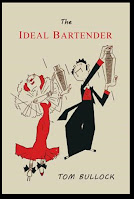
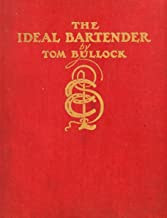
[Bullock’s 1917 book, the last to be published before National Prohibition, has been reprinted numerous times because it has long been out of copyright.  Various editions are shown through this post.]


Bullock became particularly famous for his Mint Juleps. “The Ideal Bartender” contains two recipes – Kentucky Style and St. Louis Style. The former is the familiar Mint Julep he probably mastered at the Pendennis Club. The other recipe includes gin, lemon and lime juice, and Grenadine, a non-alcoholic bar syrup. In a nod to Busch, “The Ideal Bartender” also includes a drink called Golfer’s Delight that used Bevo, a non-alcoholic beer that Anheuser-Busch developed in anticipation of Prohibition.


Bullock was at the height of his popularity in 1917. Then America did the unthinkable and outlawed alcohol. Missouri was actually one of the last states to adopt Prohibition. It was rejected in the 1910, 1912, and 1918 elections. However in 1919, the Missouri General Assembly accepted prohibition by ratifying the 18th Amendment. Thereafter, Bullock is listed in the St. Louis City Directory as working a laborer or a butler, but most cocktail writers believe he continued to serve alcohol. He remained employed for several years by the St. Louis Country Club but they were not specific about his duties.  Bullock mysteriously disappears from the public record after 1927. It is generally accepted that he didn’t die until 1964, but almost nothing is known about the years in between.


“The Ideal Bartender” celebrated its 100th anniversary in 2017, and Bullock seems to be as hot as ever. Planter’s House, a cocktail bar and restaurant in St. Louis, named a Bullock Room in his honor. And in 2013, D’USSÉ Cognac established the Tom Bullock Award for Distinguished Service in Washington, D.C.  In 2019, a mural [shown below] dedicated to Tom Bullock was installed on the side of a prominent Louisville restaurant, just down the street from the site of the original Pendennis Club.  Artist and Louisville native Kacy Jackson designed the mural which depicts Bullock serving up an Old Fashioned cocktail.


Notes:  Through the good offices of Jordan Skora of Louisville Tourism, I have been in indirect touch with the author of this post, Michael Jones. Jordan has provided his response: “Thanks. I’ll take a look at it, but I’m for anything that gets Bullock’s name out there.”  And my thanks to you, Michael, for bringing Bullock to the fore.


Saturday, July 2, 2022

Whiskey Men Involved in World Expositions


Foreword:  During the three decades from 1890 to 1920, the globe exploded with dozens of expositions, known popularly as “world fairs.” They included a whopping 31 during that period held in the United States alone.  Compare that number with none—zero—on these shores during the past 30 plus years — and only a few abroad.  In their heyday, however, expositions drew considerable public attention.   Presented here are vignettes of three pre-Prohibition “whiskey men,” each with a particular role in such extravaganzas.


Edmund Roche was a beneficiary.  Roche owned a saloon and liquor house in Aberdeen, North Dakota, when prohibitionary laws forced him to shut down.  He quickly uprooted his family and moved 700 miles east to America’s second largest city — Chicago.  He clearly had been saving his money because on his arrival he announced that he was looking to purchasing an established liquor business.  Enright & Kelly, founded in 1877, had operated successfully for two decades at 226-28 Kinzie St. but were in trouble with Chicago authorities for illegal sales.  The partners sold out to the newcomer who promptly renamed the business the “E.H. Roche Company.”


Roche was made for Chicago — and Chicago for Roche.  The era was one of exuberance in the “hog butcher for the world,” as Carl Sandburg termed the city. A program cover projected the self-proclaimed “Metropolis of the West” with its global aspirations in the arts, science and industry. That drive that would culminate in the Columbian Exposition of 1893, a World’s Fair of a proportion and impact seldom, if ever, to be equaled in the United States. 


The exposition drew millions to Chicago and filled the coffers of enterprises like Roche’s with an avalanche of cash.  Roche was quick to catch the flavor of Chicago, symbolically naming one of his flagship whiskeys “World’s Fair Rye.”  He also issued a colorful paperweight that advertised the liquor house and and carried an attractive color picture of the Columbian Exposition main building.


Roche’s profitability triggered his interest in opening liquor enterprises in other cities.  He opened an outlet in Des Moines, Iowa, and subsequently operated three stores in Detroit.   By the mid-1900s Roche also had become the president of the Hendryx Distilling Co.  Despite the name of the firm, he was not a distiller, but a rectifier, that is, blending and compounding whiskeys on one of the floors of his building at 170 East Ohio Street in Chicago.  All would be closed after 1920 with the coming of National Prohibition.  In the meantime, however, the Chicago World’s Fair had been very, very good to Edmund Roche.


Joseph Beck & Sons were participants.   They were not the only whiskey men to display their wares at the Paris Exposition of 1900, but the New York City distillers/rectifiers appear to have been the smallest company among the pioneering exhibitors who made “so fine a showing,” who won a plethora of medals, and who brought American whiskey aggressively to the attention of the European Continent.


That World’s Fair had been announced by the French government as a celebration of the dawning of the Twentieth Century.  Countries from around the world were invited by France to showcase their achievements and products. An official of the U.S. Department of Agriculture, Dr. H.W. Wiley, decided that the Paris Exposition was a perfect time to show Europeans the decided benefits of  American made alcoholic beverages.  Using his contacts in the liquor industry, Wiley collected commitments from fourteen “leading houses,” including the Becks, to submit their whiskeys for exhibit in Paris at the United States pavilion.


Shown here, the whiskey exhibits were displayed in two cases, each six feet square and eight feet high, and facing on the two main isles.  While some ten distillers displayed their wares together in Case 108, the Becks invested in a much larger exhibit and shared Case 107 with only two other distillers. The Becks’ exhibit featured rank after rank of the company’s flagship brand, “Beckmore.”


The American whiskey exhibit was cited by Wiley as having the unique merit of being the only one containing more than one display in which every exhibitor secured an award. Bestowed by the tasting judges of the Paris Exposition, one-third of the whiskeys received gold medals and the others silver or bronze.  


Joseph Beck & Sons  were awarded a medal for “merit and quality” for their Beckmore brand whiskey,  It is unclear, however, if this represented a gold medal or a lesser silver or bronze. The rank apparently made no difference to the Becks.  They made the success of their Paris excursion a centerpiece of their subsequent merchandising, displaying the honor on their letterhead, whiskey labels, and advertising on shot glasses given to favored customers. 


Edward E. Bruce was an organizer.  Although Bruce accounted himself an Omaha  wholesale druggist, his advertising emphasized his wines, whiskey and brandy.  His flagship brand was “Country Club Bourbon” that he sold in stoneware jugs.  His whiskey likely was obtained from distilleries in Kentucky. He also may have done some “rectifying,” that is, mixing several whiskeys to improved taste and smoothness.


Bruce was well-known in Omaha business circles, according to a contemporary account, a gentleman respected for his ability, enterprise and ingenuity. A co-founder of the National Association of Wholesale Druggists,  he also was a  member of the Omaha Grain Exchange Board. Presumably as a result of his strong business reputation, Bruce was tapped by Omaha’s gentry to be a principal officer for a world’s fair known as the "Trans-Mississippi International Exposition."  This event was inspired by leading Nebraskans to illustrate the “progress of the West." It highlighted the 24 states and territories west of the Mississippi River and was meant to spur economic development. 


Held a mere five years after Chicago’s highly successful 1893 Columbian World’s Fair, the Trans-Mississippi Exposition ran from June to November 1898.   Bruce held the pivotal position of exhibits manager for the Exposition, an extravaganza that stretched several miles.  He was pivotal in choosing and managing 4,062 individual exhibits. The success of his efforts can be measured in the 2.6 million people who visited during the six month run of the fair.  Constructed quickly of flimsy materials, none of the Exposition buildings survives today.


Note:  Each  of these “whiskey men” has been given more elaborate treatment in prior posts on this website:  Edmund Roche, February 25, 2015;  The Becks, September 3, 2015; and E.E. Bruce, May 18, 2011.